Italian idiom: L’acciuga vuol nuotare tre volte: nell’acqua, nell’olio, nel vino
The anchovies want to swim three times:
in water, in oil, in wine
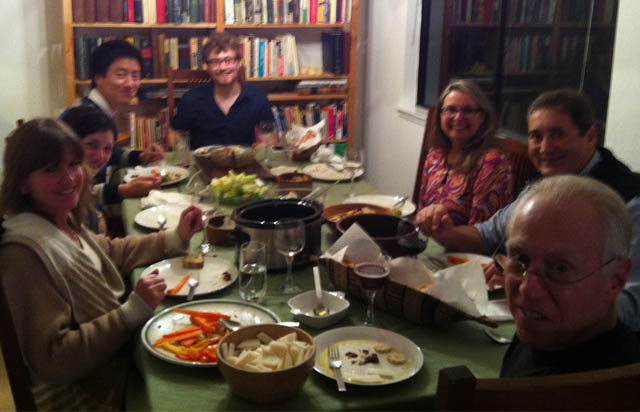
Come trascorrere una serata perfetta con gli amici? Prendere un bagno caldo con loro, naturalmente! Ma non sto parlando di trascorrere una serata in una vasca idromassaggio. Mentre quello potrebbe avere i suoi vantaggi qualche volta…sto invece parlando di preparare un “bagno cauda”. “Bagno caude” letteralmente “hot bath” o in dialetto piemontese “salsa calda”, è un condimento a base di aglio, olio e acciughe che viene servito assieme alle verdure sia cotte che crude. Ma non è semplicemente una salsa che accompagna le verdure e come tale non va “sminuita”, perché preparare un bagna cauda bensì è un vero e proprio rito, un simbolo di allegria, amicizia e convivialità.
How does one spend a perfect evening with friends? Taking a hot bath with them, of course! But, I’m not talking about spending the evening in a hot tub. While that might have its merits on some occasions…I am talking about making “bagno cauda”. The name “bagno caude” literally “hot bath” in the Piemontese dialect means “hot sauce” / “salsa calda”, is a dish that consists of garlic, olive oil, and sardines that is served with vegetables cooked or crude. But it isn’t just a simple sauce to be served with veggies and as such its rich qualities shouldn’t be diminished, because fare un bagno cauda is a real and proper ritual, a symbol of happiness, friendship and conviviality.
La bagna cauda nasce nel Medioevo come piatto povero, che i contadini preparavano per proteggersi dal freddo e che i nobili aborrivano per via della presenza massiccia dell’aglio che rendeva il fiato pestilente, per di più in un’epoca in cui ancora non esisteva il dentifricio. In particolare alcune testimonianze storiche fanno risalire la nascita della bagna cauda nel basso Piemonte, nelle zone dell’Astigiano, del Monferrato, delle Langhe e del Roero, dove i vignaioli per festeggiare la spillatura del vino nuovo, a novembre, si riunivano con gli amici e la famiglia e mangiavano verdure e bagna cauda. Da allora il rito di sedersi attorno alla tavola con al centro “il fojot”, il contenitore di terracotta che tiene in caldo la salsa, è sopravvissuto fino ai nostri giorni, e di certo non mancano osterie e trattorie piemontesi che hanno inserito nel menù questo piatto, prima relegato solo alla tradizione contadina, e oggi rivalutato e rivalorizzato in tutte le sue varianti.
Bagna cauda was first “born” in medieval times as a poor man’s dish, that the peasants used to prepare to protect themselves from the cold and which the nobles abhorred because of the intense amounts of garlic that made one’s breath stink, which one has to admit in a time when dental floss didn’t exist was kind of a downer. In accordance with historical testimony, it is said that the “birth” of bagno cauda was first developed in southern Piemonte, in the areas of dell’Astigiano, del Monferrato, delle Langhe e del Roero, where the vintners celebrated the first tipping of the new wines in November. At this time they joined together with their friends and families and ate vegetables with a nice hot bagna cauda. Since then the ritual of sitting down together around a table, that has placed in its center “il fojot”, the terracotta container that holds the hot sauce, survives to this day and is not a stranger to taverns and trattorie in Piemonte as they have made sure that this “pietanza” is included in the menu. First delegated as traditional poor man’s food, now today elevated and celebrated in all its many variations.
Ma come mai uno degli ingredienti fondamentali della bagna cauda siano le acciughe, un pesce, anche se il Piemonte non confina con il mare e non è mai stato una terra di pescatori? Ma infatti il Piemonte è stato piuttosto una terra di acciugai, in particolar modo nel Medioevo quando il prezzo del sale era alle stelle e molti montanari e contadini piemontesi percorrevano quelle che oggi conosciamo come le vie del sale fino alla Liguria e alla foce del Rodano dove acquistavano il sale a prezzi più accessibili e lo trasportavano in barili nascosto sotto strati di acciughe in modo da ingannare potenziali ladri. Una volta ritornati in patria rivendevano il sale a prezzi più alti e le acciughe a prezzi stracciati, acciughe che, tra l’altro, essendo state a contatto con il sale, erano diventate più saporite e si conservavano per più tempo.
But, why in the world would one of the main ingredients of bagna caude be sardines, a fish! as Piemonte is not bordered by the sea and has never been a land of fisherman? But actually, Piemonte has been long considered a land of fish, especially in the middle ages when the price of the sale was astronomical and many mountain people, as well as farmers, traveled what we know of today as the “le vie del sale” the “salt road” from Liguria to the mouth of the Rhone river where that acquired salt at more reasonable prices and transported it in barrels hidden under layers of sardines so as to deceive potential robbers. Once they arrived home they raised the price of the salt at higher prices and the anchovies at more reasonable prices, which having been saturated in the salt during transit had become extremely delectable and well preserved.
C’è un modo di dire delle acciughe che va così: L’acciuga vuol nuotare tre volte: nell’acqua, nell’olio, nel vino – cioè le accighe nuotano nell’acqua di mare, nell’olio in padella e nel vino nello stomaco. Non posso essere in disaccordo con quella frase dopo il nostro bel bagno caudo, che ho condiviso con gli amici ieri sera!
There is an Italian idiom that goes like this: The anchovies want to swim three times: in water, in oil, in wine – which means the sardines swim in seawater, in the oil that goes into the pan for cooking and in the wine that also fills the stomach. I can’t disagree with this, especially after our wonderful bagno caudo, that I share with friends the other night!
There are numerous variations on the traditional bagna cauda recipe, but the most simple consists of only three ingredients: olive oil, garlic and anchovies.
1/2 cup serves 4 as appetizer or a nice party dip.
1/2 cup butter 3 tablespoons olive oil
1 can anchovy fillets
3 garlic cloves chili flakes (optional)
Puree the anchovies and garlic cloves: or, just chop both really finely to make a paste.
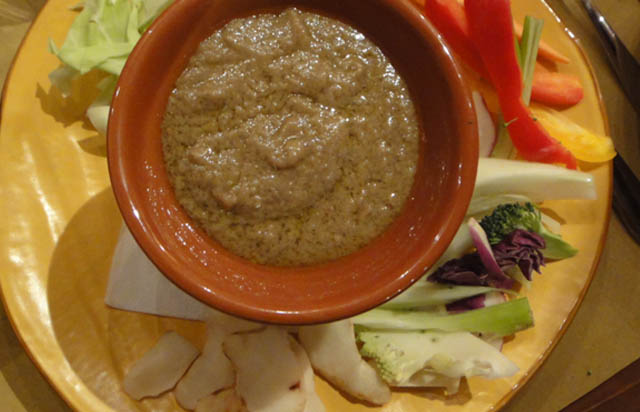
Heat on low: In a saucepan on low heat, add all ingredients. Keep the flame on low so that the butter/oil gets totally infused with the anchovy and garlic. Once the butter melts, just let it continue to sit on the low flame for another 5 minutes. Serve warm. If you use a fondue pot – double or triple the recipe. The little candle fondue bowl pictured above was purchased for $5 at Marshall’s.
Vegetables & Stuff to Dip Assortment of raw, steamed, or roasted vegetables. I used broccoli, french green beans, radishes (all raw). I also had fresh bread and a few sauteed shrimp. Other ideas include baby carrots, steamed artichoke hearts, red bell pepper slices, asparagus, celery, zucchini, cauliflower, endive.