Cappelli “Matti” che sfidano gravità, costumi che sfidano la logica: Carnevale è magia
Crazy hats that defy gravity, costumes that defy logic: Carnival is magic
Carnevale: sipario giù… ma la fantasia resta!
Carnival: curtain down… but the imagination stays!
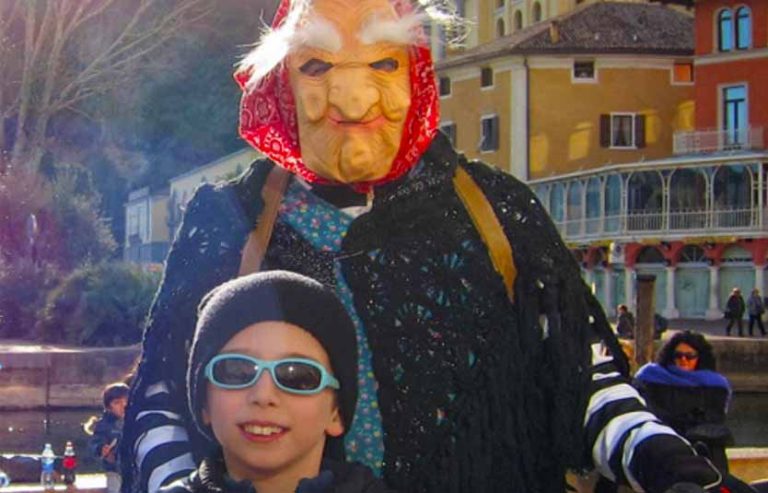
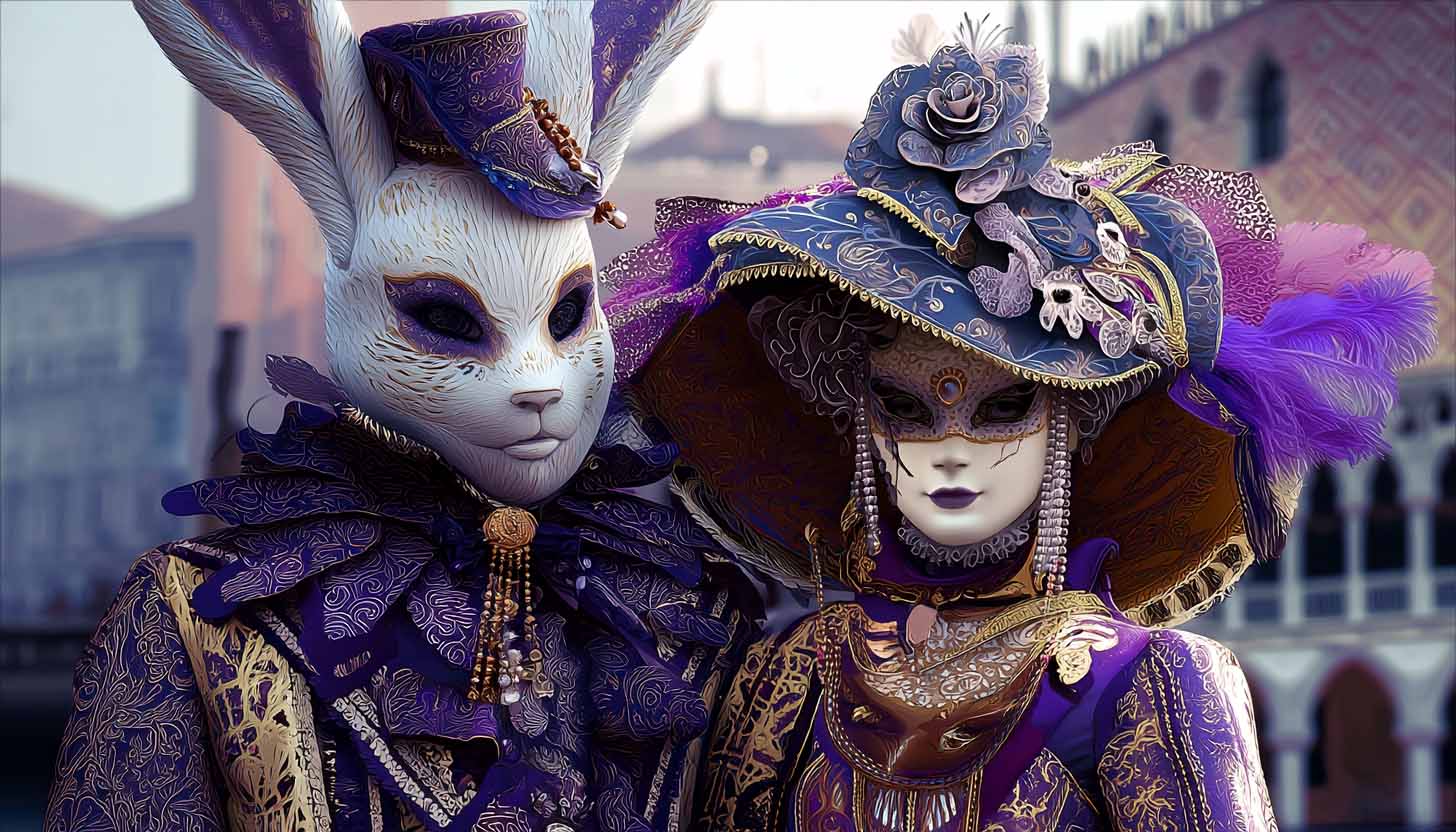
Il Carnevale in Italia si è appena concluso, e io (come sempre) ne esco con gli occhi pieni di meraviglia: costumi impossibili, maschere teatrali, e quell’aria frizzante da “qui può succedere di tutto”. Scorrendo i social si vede davvero il meglio del meglio: la Gioconda che prende vita, teiere con le gambe, creature fantastiche… e bambini travestiti da cannoli. In Italia, il Carnevale non delude mai.
Carnival season in Italy has just wrapped up, and I (as always) come away with my eyes full of wonder: impossible costumes, theatrical masks, and that fizzy feeling of “anything can happen here.” Scrolling social media is basically a highlight reel: the Mona Lisa brought to life, teapots with legs, fantastical beings… and kids dressed up as cannoli. In Italy, Carnival never runs out of surprises.
A Venezia nel paese delle meraviglie… spunta il Cappellaio Matto
In the Venetian Wonderland… the Mad Hatter appears
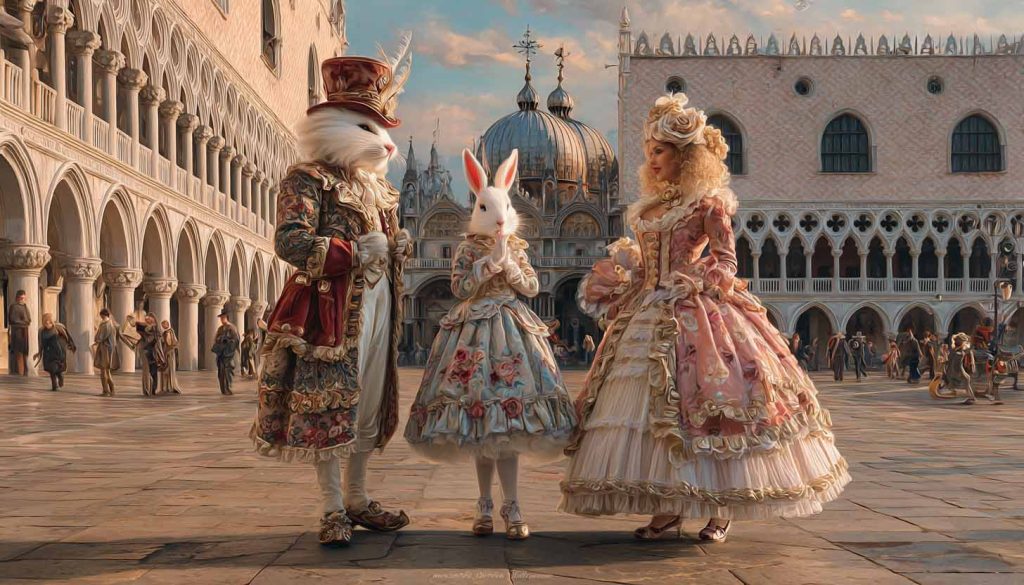
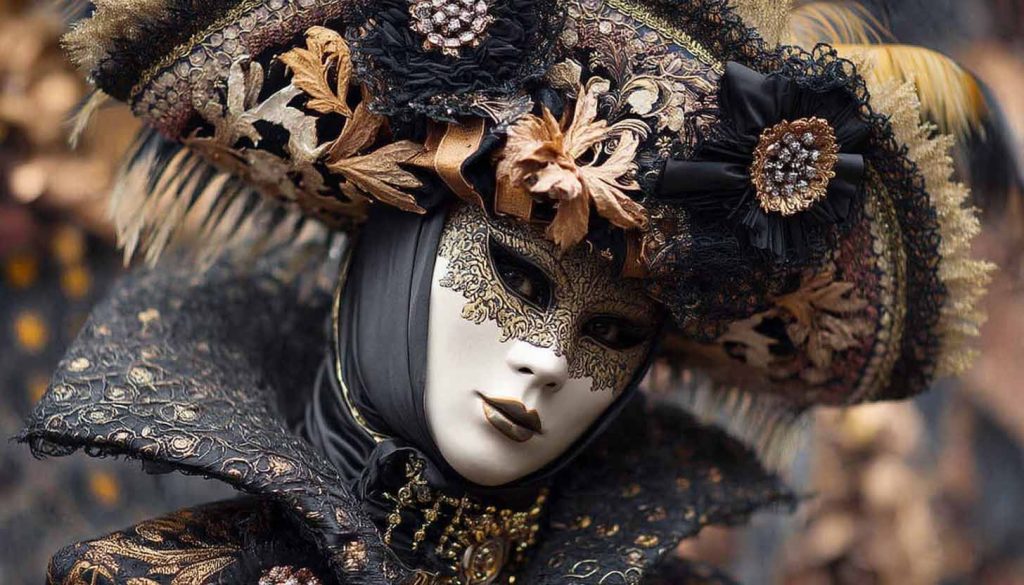
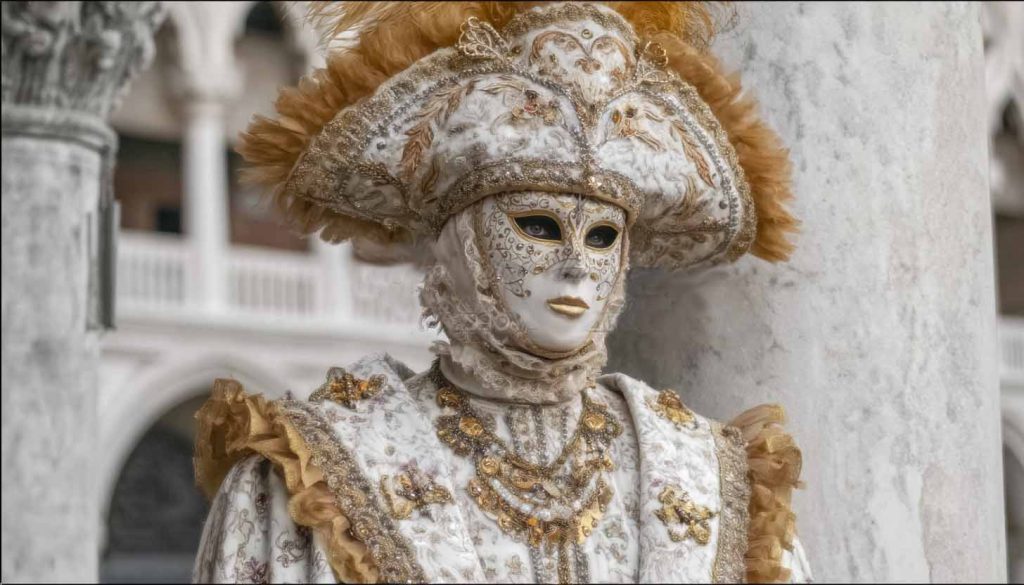
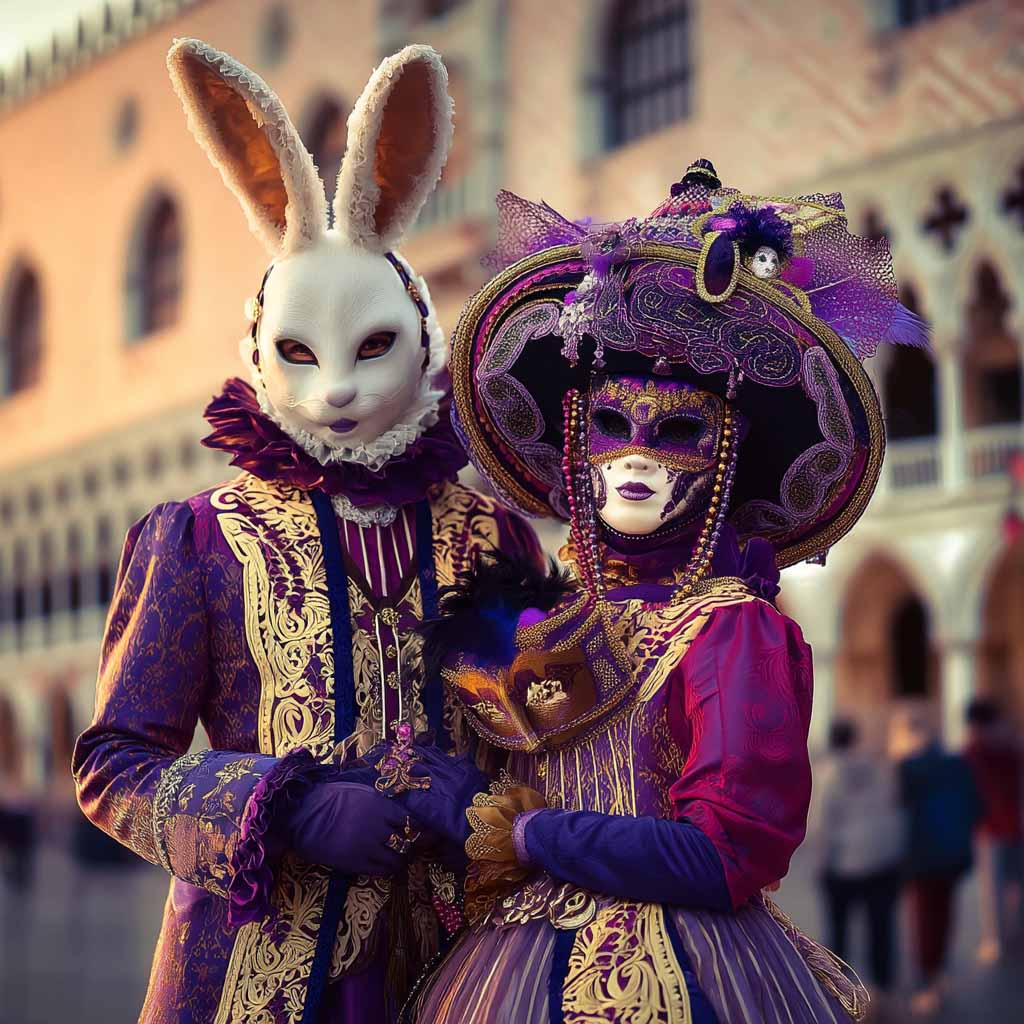
Tra le immagini più “ma che sto guardando?!” ho visto persone con cappelli enormi e copricapi che sembravano uscite da un sogno—o scappate direttamente dal dietro le quinte di un’opera lirica super teatrale. E poi, come se si alzasse il sipario, chi entra in scena sul palco? Alice, il Bianconiglio, il Paese delle Meraviglie… ed eccolo lì: il Cappellaio Matto.
Among the most “what am I looking at?!” images, I spotted people in enormous hats and headpieces that looked like they’d stepped out of a dream—or wandered straight off a wildly theatrical opera backstage. And then, as if the curtain lifted, who steps onto the palco? Alice, the White Rabbit, Wonderland… and there he is: the Mad Hatter.
Quando ho realizzato che in italiano “Mad Hatter” si traduce con Cappellaio Matto, ho riso tra me e me. Perché diciamolo: io sono la Studentessa Matta—quindi un Cappellaio Matto nel mio Carnevale linguistico ci sta benissimo!
When I realized that “Mad Hatter” in Italian is Cappellaio Matto, I laughed to myself. Because let’s be honest: I’m la Studentessa Matta—so a Mad Hatter in my language-learning Carnival is basically inevitable!
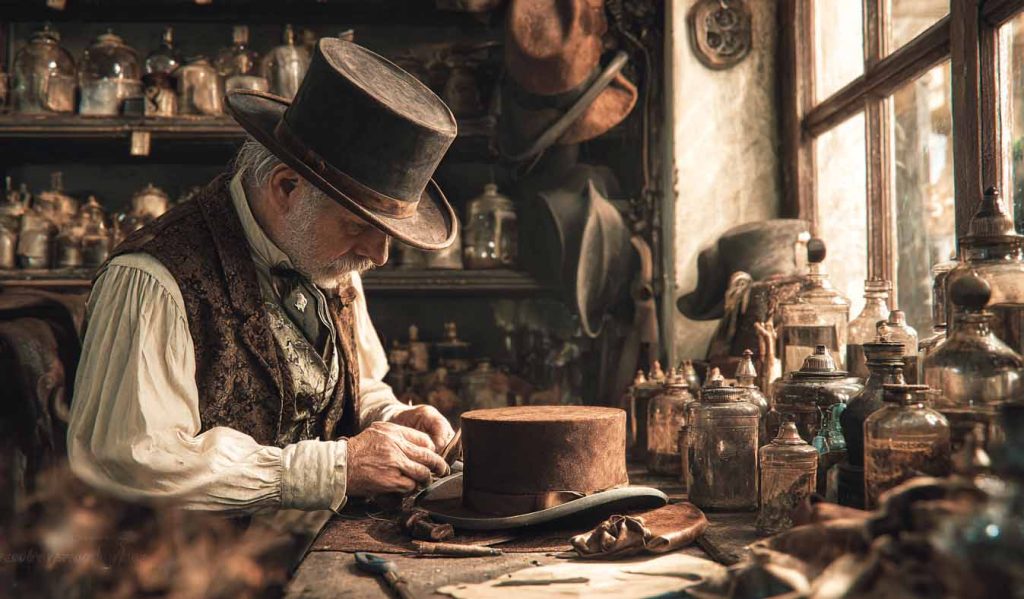
Perché “matto”? La storia (strana) dietro un modo di dire
Why “mad”? The (strange) story behind the phrase
Ecco la curiosità che rende tutto ancora più… matto. Tra Settecento e Ottocento (e fino al primo Novecento), molti cappellai da inghilterra a Italia, usavano composti di mercurio (come il nitrato di mercurio) per lavorare il feltro. Il problema? I vapori, respirati per anni in ambienti poco ventilati, potevano causare tremori, irritabilità, sbalzi d’umore e altri sintomi neurologici: il famoso “Mad Hatter syndrome” (erethism).
Here’s the fun (and weird) fact that makes it even more “mad.” In the 18th–19th centuries (and into the early 20th), many hat makers from England to Italy used mercury compounds (like mercuric nitrate) to treat felt. The catch? Breathing mercury fumes for years—often in poorly ventilated workshops—could cause tremors, mood changes, irritability, and other neurological symptoms: what’s often called “Mad Hatter syndrome” (erethism).
E così nasce anche l’eco dell’espressione “mad as a hatter” (matto come un cappellaio). Carroll scriveva in un’epoca in cui questa associazione era già nell’aria—e la lingua, come sempre, si è tenuta stretta la storia.
And that’s where the expression “mad as a hatter” gets its historical fuel. Carroll was writing in an era when this association already floated around—language, as always, kept the story.
Carnevale di Venezia 2026: “Olympus – Alle origini del gioco”
Venice Carnival 2026: “Olympus – The Origins of the Game”
A Venezia, il tema ufficiale dell’anno 2026 Carnevale è stato “Olympus – Alle origini del gioco / The Origins of the Game”, un omaggio all’anno olimpico di Milano–Cortina 2026, tra mito, arte, sport e immaginazione collettiva—e un po’ di Bridgerton!
In Venice, the official theme of the 2026 Carnival was “Olympus – At the Origins of the Game,” a tribute to the Olympic year of Milano–Cortina 2026—blending myth, art, sport, and collective imagination—and a bit of Bridgerton!.
I festeggiamenti si sono svolti dal 31 gennaio al 17 febbraio 2026: è stato quel tipo di magia carnevalesca che ti faceva venir voglia di indossare una maschera anche solo per uscire a comprare il pane.
The festivities ran from January 31 to February 17, 2026—it was the kind of carnival magic that made you want to wear a mask even when just went out to buy bread.
Viareggio 2026: i carri allegorici che fanno “WOW”
Viareggio 2026: floats that make you say “WOW”
I Corsi Mascherati—le celebri sfilate ufficiali del Carnevale di Viareggio—sono il cuore pulsante di tutta la festa: i giorni in cui la città si trasforma in un teatro a cielo aperto e la passeggiata sul mare diventa una passerella di satira, arte e spettacolo.
The Corsi Mascherati—Viareggio’s famous masked parade events—are the beating heart of the entire Carnevale: the days when the city turns into an open-air theater and the seaside promenade becomes a runway for satire, artistry, and jaw-dropping spectacle.
E poi ci sono i carri: gigantesche creazioni di cartapesta che non si limitano a passare… recitano, come personaggi dotati di vita propria. Un attimo c’è un lupo terrificante che dà la caccia a Cappuccetto Rosso, poi una fanciulla giapponese elegantissima, quindi samurai con spade sguainate, rane gigantesche e battute politiche taglienti. Viareggio ha davvero tutto—e i Corsi Mascherati te lo servono in versione “WOW” totale.
And then there are the floats: gigantic papier-mâché creations that don’t just roll by… they perform, like characters with a mind of their own. One moment it’s a terrifying wolf stalking Little Red Riding Hood, the next a serene Japanese maiden, then samurai flashing swords, oversized frogs, and wickedly clever political commentary. Viareggio has it all—and the Corsi Mascherati deliver it with maximum wow.
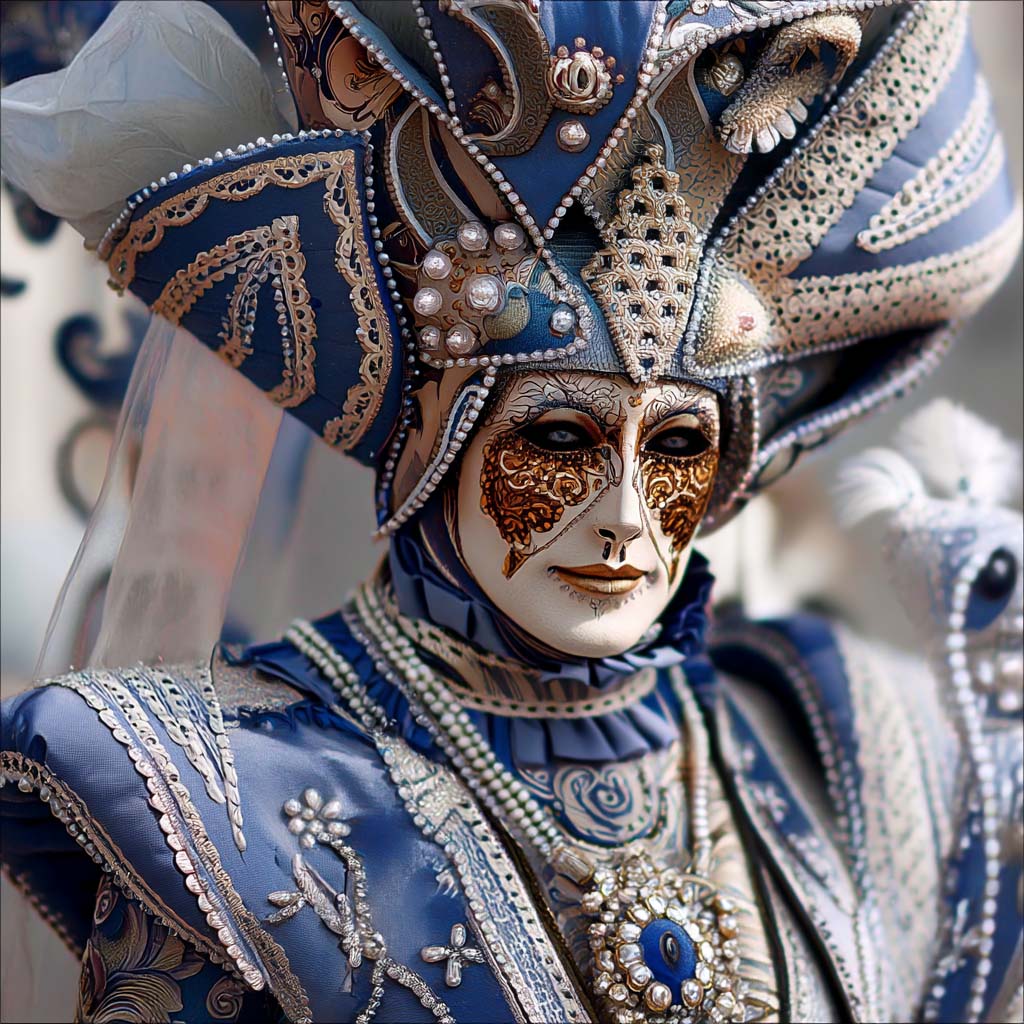
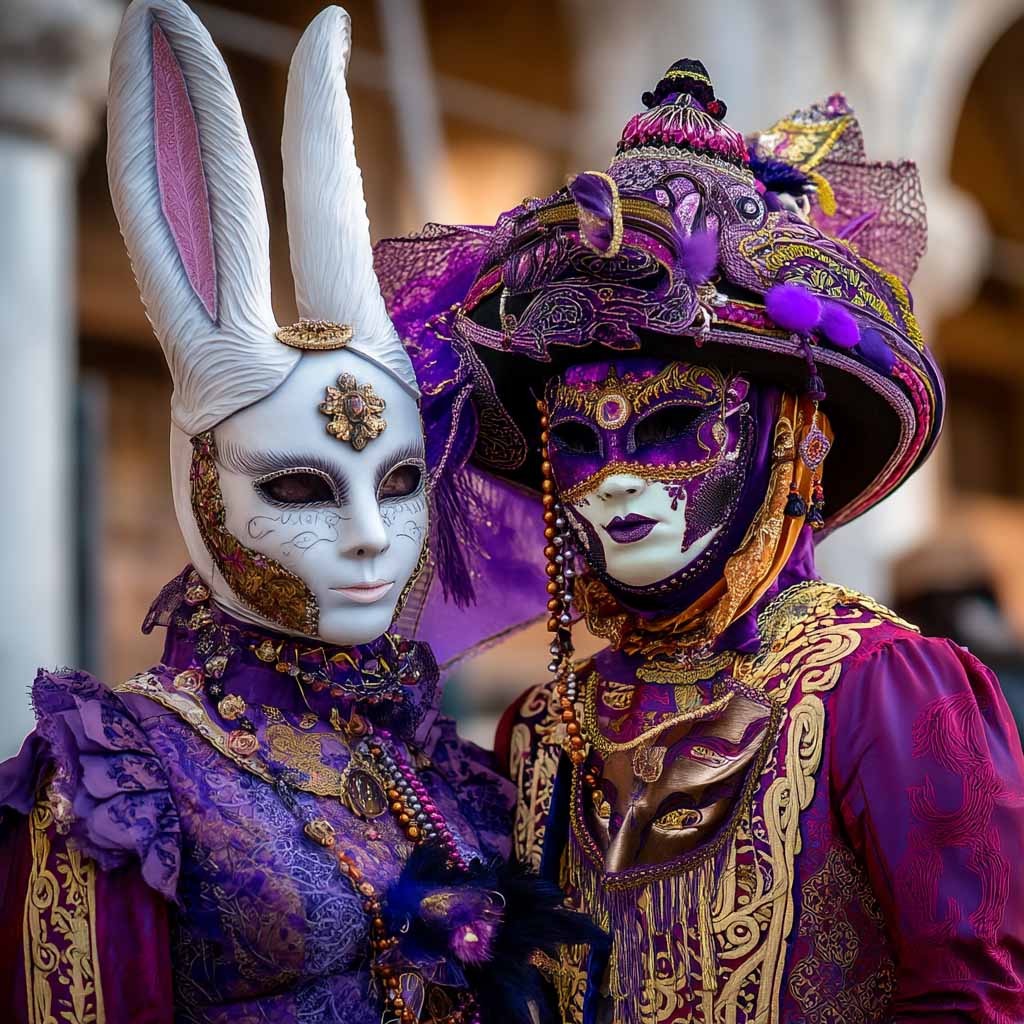
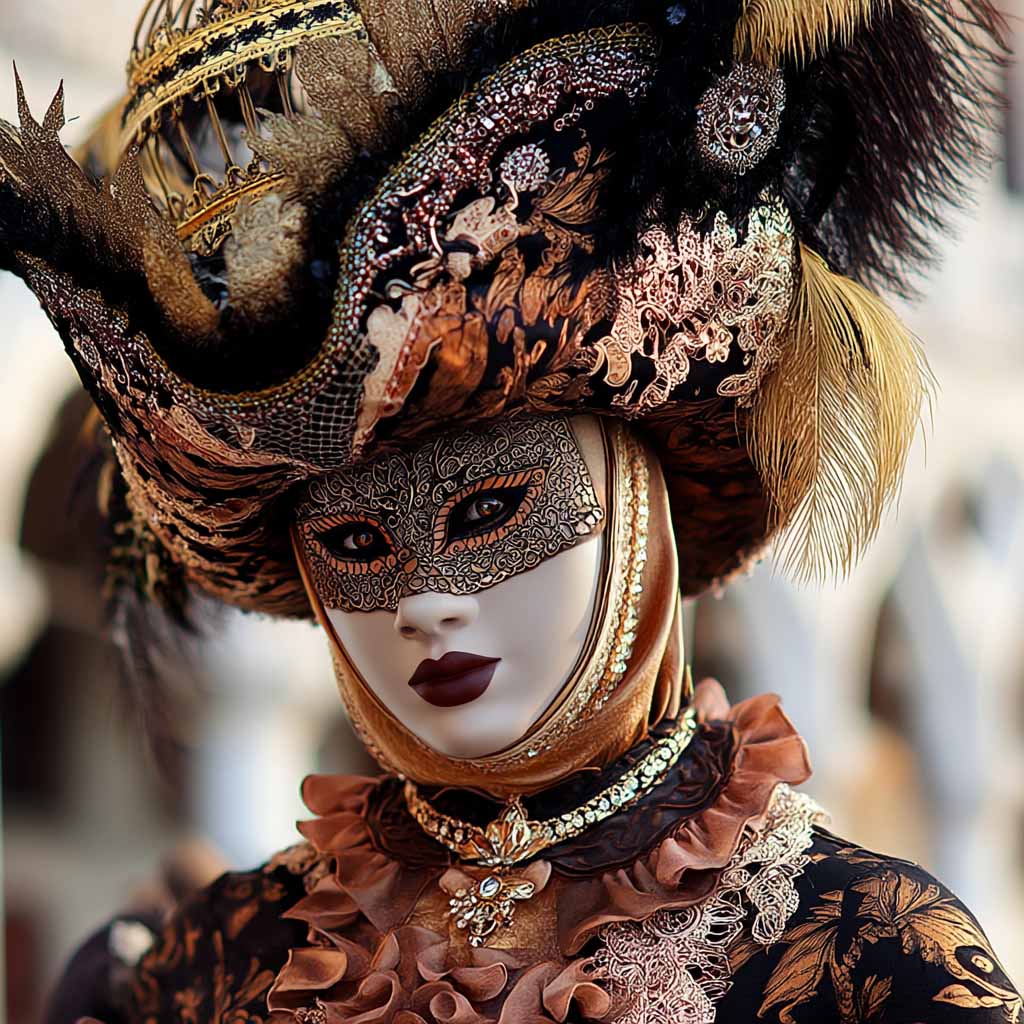
Tra costumi, teatro e cappelli “matti” fuori scala… ecco il vocabolario di Carnevale!
Between costumes, drama, and larger-than-life “mad” hats… here’s your Carnival vocabulary!
Ecco un mini kit di vocabolario di Carnevale che ti sarà utilissimo la prossima volta che ti ritrovi a Venezia in piena festa—oppure alla tua prossima festa in maschera. Così puoi commentare costumi e carri con stile, chiedere dove si svolge la sfilata, e (ovviamente) lanciare un allegro: “Che meraviglia!”
Here’s a mini Carnival vocabulary kit that’ll come in handy the next time you find yourself in Venice in full party mode—or at your next costume party. You’ll be able to compliment costumes and floats with flair, ask where the parade is happening, and (of course) toss out a cheerful: “How marvelous!”
maschera
travestimento
costume
carro allegorico
sfilata
coriandoli
stelle filanti
festa in maschera
cartapesta
chiassoso
spumeggiante
fare baldoria
mettersi in maschera
= mask
= costume / disguise
= costume (also “swimsuit,” careful!)
= parade float
= parade / procession
= confetti
= streamers
= masquerade party
= papier-mâché
= noisy / boisterous
= bubbly, lively
= to party / make merry
= to dress up (masked)
Fun fact di Carnevale (da vera Matta)
Carnival fun fact (Matta-approved)
Carnevale viene spesso spiegato come “carne levare”, cioè “togliere la carne”: un riferimento al periodo che precede la Quaresima, quando tradizionalmente si facevano grandi feste e grandi mangiate prima delle restrizioni.
The word Carnevale is often explained as “carne levare” (“remove meat”)—a nod to the period right before Lent, when people traditionally feasted and celebrated before fasting and restrictions.
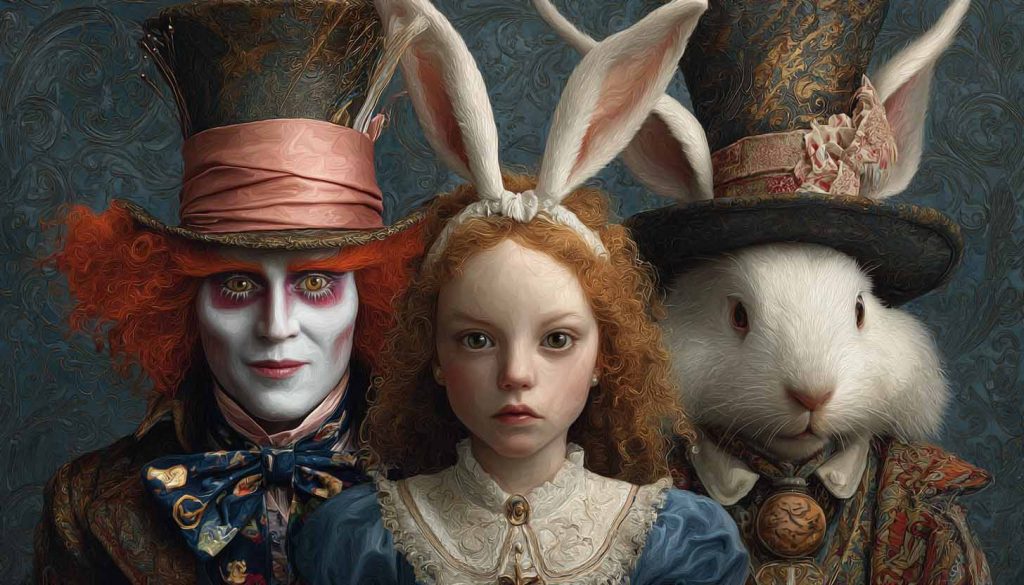
Ed ora: inchino finale… e un elegante colpo di tesa al cappello gigante!
And now: the final bow… and a stylish tip of a giant hat!
Carnevale finisce, e si torna alla vita “normale”… però con un po’ di brillantini immaginari ancora sulle maniche. E io, da Studentessa Matta, mi porto via soprattutto questo: il Carnevale è la prova che in Italia la creatività non va mai davvero in letargo.
Carnival ends, and we go back to “normal” life… but with a little imaginary glitter still on our sleeves. And as La Studentessa Matta, I take away this: Carnival is proof that in Italy, creativity never truly hibernates.
E quindi: sipario giù, maschere e mantelli tornano nell’armadio… ma io tengo il cappello a portata di mano (e un occhio sul coniglio). Perché basta una parola—tipo Cappellaio Matto—e io sono di nuovo lì: felice, curiosa, e pronta a ricadere nella tana del Bianconiglio.
So: curtain down, masks and capes go back in the closet… but I’m keeping my hat within reach (and one eye on the rabbit). Because all it takes is one word—like Cappellaio Matto—and I’m happily falling down the rabbit hole again
🇮🇹 Un consiglio dalla Matta 🇮🇹
Matta Italian Language Tip!
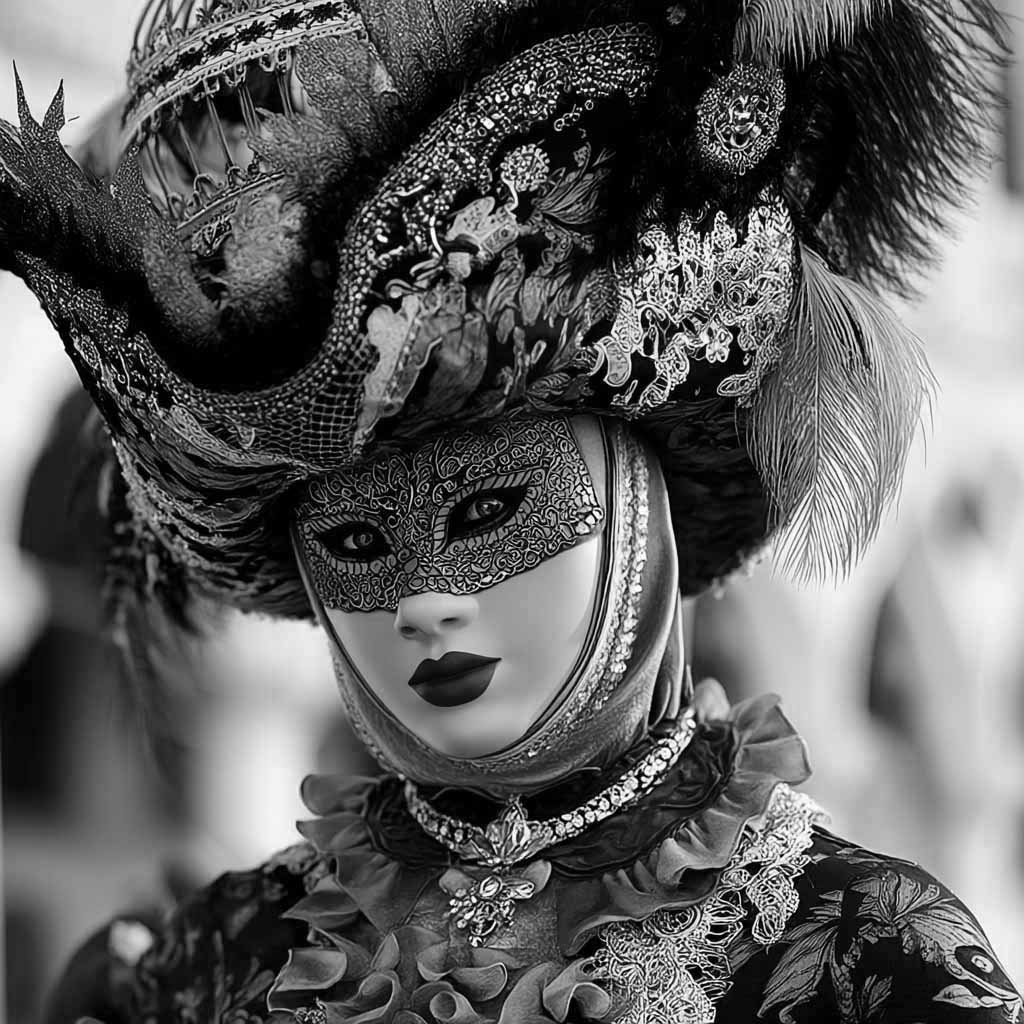
Un trucchetto “matto” per ricordare “cappellaio”
“Matta” trick to remember “cappellaio”
Pensa così: cappello → cappellaio (la persona dei cappelli).
Think: cappello → cappellaio (the hat person).
“A Carnevale mi metto in maschera… ma dentro resto sempre un po’ cappellaio matto!”
“At Carnival I dress up… but inside I’m always a little bit of a mad hatter!”
Another Matta Tip: If you’d like to print or create a PDF of this post you can easily do so using the Chrome Browser Extension —-> GoFullPage! It works beautifully!
Read the novel that takes you on a journey through Italy… and ends in Venezia during Carnevale!
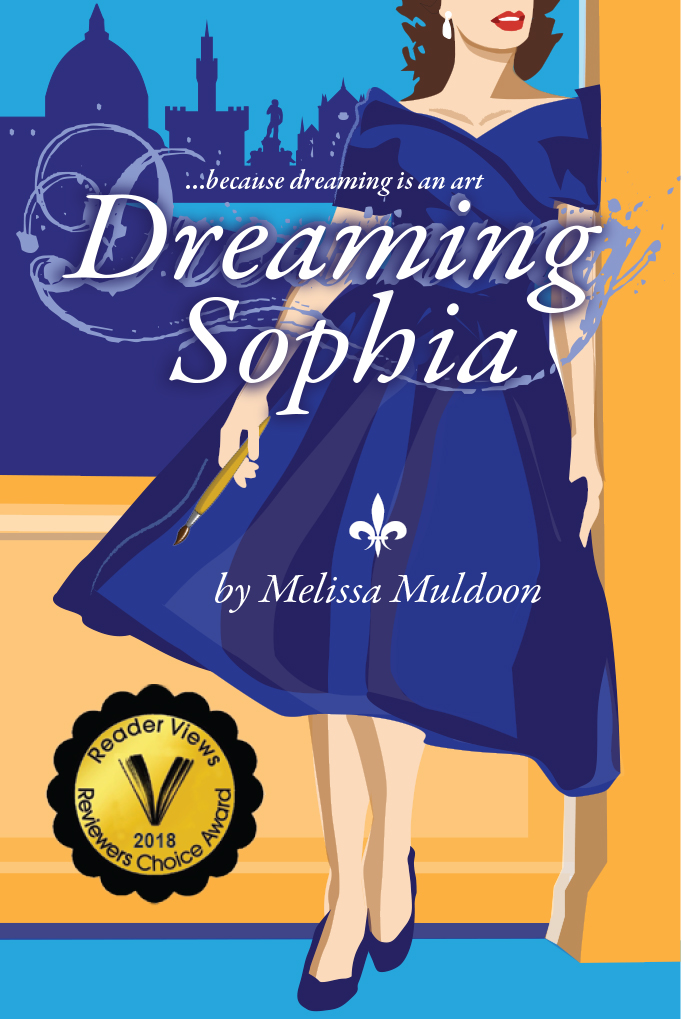
Dreaming Sophia
Dreaming Sophia is a magical look into Italy, language, art, and culture. It is a story about turning dreams into reality and learning to walk the fine line between fact and fantasy. When tragedy strikes, Sophia finds herself alone in the world, without direction and fearful of loving again. With only her vivid imagination to guide her, she begins a journey that will take her from the vineyards in Sonoma, California to a grad school in Philadelphia and, eventually, to Italy: Florence, Lucca, Rome, Verona, Venice, and Val d’Orcia. Through dreamlike encounters, Sophia meets Italian personalities—princes, poets, duchesses, artists, and film stars— who give her advice to help put her life back together. Following a path that takes her from grief to joy, she discovers the source of her creativity and learns to love again, turning her dreams into reality.