

Da “Lo mangio” a “Ti mando un invito”: piccoli pronomi, grande impatto!
From “I eat it” to “I send you an invitation”: small pronouns, big impact!
Scorciatoie: Parla come un Vero Italiano con i Pronomi Diretti e Indiretti
Italian Shortcuts: Speak Like a True Italian with Direct & Indirect Pronouns
I pronomi italiani ti fanno passare l’appetito? Non allontanare il piatto così presto — stiamo per trasformare questa grammatica difficile in un piatto delizioso tutto da gustare!
Italian pronouns got you losing your appetite? Don’t push away the plate just yet — we’re about to turn this tricky grammar into a delicious dish you’ll actually want to savor!
Hai appena gustato un delizioso aperitivo e hai padroneggiato i pronomi riflessivi (mi, ti, si, ci, vi, si) — BAM! — ed ecco che arrivano altri piatti in tavola pieni di pronomi diretti e indiretti. Niente panico — e niente indigestione! Stiamo per trasformare questo pasto di grammatica difficile in un vero banchetto. Sei cordialmente invitato a una Cena Grammaticale Matta, dove i pronomi diretti arrivano come primo piatto e i pronomi indiretti seguono come una saporita seconda pietanza. Quindi, prendi posto, porta l’appetito e preparati a gustare tutte le portate — tutti a tavola!
You’ve just savored a delicious aperitivo and mastered the reflexive pronouns (mi, ti, si, ci, vi, si) — BAM! — and suddenly more courses arrive at the table filled with direct and indirect pronouns. Don’t panic — and no need for indigestion! We’re about to turn this grammar challenged meal into a feast. You’re cordially invited to a Matta Grammatical Dinner Party, where the Direct Object Pronouns arrive as the primo piatto and the Indirect Object Pronouns follow as a flavorful seconda pietanza. So grab your seat, bring your appetite, and get ready to enjoy the all the courses — tutti a tavola!

Servendo i Pronomi Diretti: Cosa Sono e Come Usarli
Serving Direct Object Pronouns: What They Are & How to Use Them
I pronomi diretti sono parole brevi e agili che entrano in scena per sostituire un nome già menzionato, evitandoti di ripeterlo ancora e ancora. Ci dicono esattamente chi o che cosa riceve direttamente l’azione del verbo. In altre parole, sono una scorciatoia linguistica elegante che mantiene le frasi snelle e vivaci — lasciandoti più tempo per mangiare, sorseggiare il vino e mantenere frizzante la conversazione a tavola.
Direct object pronouns are short, agile words that swoop in to replace a noun you’ve already mentioned, sparing you from repeating it again and again. They tell us exactly who or what is directly receiving the action of the verb. In other words, they’re a sleek linguistic shortcut that keeps your sentences lean and lively — leaving you more time to eat, sip your wine, and keep the dinner conversation sparkling.

Primo Piatto —The First Course
Pronomi diretti / Direct Object Pronouns
Direct object pronouns in Italian replace a thing or person that directly receives the action of the verb, so we don’t have to keep repeating the noun over and over again. Think of them as the “stand-ins” for the star of the sentence — once the audience knows who the star is, you don’t need to introduce them again and again.
Mi (me)
Ti (you)
Lo (him/it)
La (her/it)
Ci (us)
Vi (you all)
Li (them – masculine)
Le (them – feminine)
Esempi / Examples using Direct Object Pronouns
Without pronoun:
Vedo Marco ogni giorno.
I see Marco every day
With pronoun:
Lo vedo ogni giorno.
I see him every day.
Without pronoun:
Porto la torta alla festa.
I’m bringing the cake to the party
With pronoun:
La porto alla festa.
I’m bringing it to the party.
Without pronoun:
Bevi spesso la limonata?
Do you often drink lemonade?
With pronoun:
Sì, la bevo spesso.
Yes, I drink it often.

Mini storia con pronomi diretti
Mini story with direct object pronouns
L’altra sera sono stata invitata a cena a casa di un’amica. Volendo portare un regalo gentile, ho comprato un mazzo di fiori colorati. Li ho presi dal fioraio dietro l’angolo di casa mia. Il profumo dei fiori era squisito: lo ha riempito dappertutto, perfino in macchina, mentre andavo dalla mia amica. Appena l’ha aperta e li ha visti, le si è illuminato il volto. Sorridendo, ha detto: “Che meraviglia! Non dovevi… ma li adoro! Dammi un minuto mentre metto il mazzo in un vaso.” Ho detto: “Certo, mettilo in acqua subito, dureranno di più!”
The other evening I was invited to dinner at a friend’s house. Wanting to bring a thoughtful gift, I bought a bouquet of colorful flowers. I got them from the florist around the corner from my house. The fragrance of the flowers was exquisite: it filled everything, even the car, while I was on my way to my friend’s place. As soon as she opened the door and saw them, her face lit up. Smiling, she said: “How wonderful! You shouldn’t have… but I love them! Give me a minute while I put the bouquet in a vase.” I said: “Of course, put it in water right away, they’ll last longer!”
Sul tavolo c’era anche una bellissima rosa rossa. La mia amica ha detto che l’ho colta in giardino e poi l’ha aggiunta al mazzo che avevo portato. Il campanello ha suonato e c’era un altro amico con delle orchidee in mano. “Che delicatezza — grazie!” ha detto Lucia. L’amico ha detto: “Appena le ho viste al mercato, ho pensato subito a te, e per questo le ho comprate.” Un’altra ospite, invece, aveva portato il prosecco: l’abbiamo aperto subito e l’abbiamo bevuto per festeggiare.
On the table there was also a beautiful red rose. My friend said that I had picked it in the garden and then she had added it to the bouquet I had brought. The doorbell rang and another friend arrived with orchids in his hands. “How delicate — thank you!” said Lucia. The friend replied: “As soon as I saw them at the market, I immediately thought of you, and that’s why I bought them.” Another guest, instead, had brought prosecco: we opened it right away and drank it to celebrate.
Direct object Pronoun grammar twist
to keep you on your toes!
You might have thought that in the past tense, when verbs are conjugated with avere, the past participle always stays the same — like “comprato.” But… aha! If you’ve been paying close attention, you may have noticed something different in the examples above: sometimes the past participle paired with the AVERE verb changes: “l’ha aperta,” “le ho comprate,” or “li ho finiti.”
Why? Because when a Direct Object Pronoun (lo, la, li, le) comes before the verb in the past tense, the past participle agrees in gender and number with the object it replaces. It’s a little detail that makes your Italian sound polished — and makes you look like you really know your stuff!
E ora il prossimo piatto gustoso: i pronomi indiretti
And Now for the Next Tasty Course: Indirect Object Pronouns
I pronomi indiretti sono piccole parole che sostituiscono “a” o “per” + una persona (o cosa), indicando a chi o per chi si compie l’azione. Sono come il maître d’ della nostra cena italiana: portano il piatto direttamente all’ospite giusto senza farti ripetere l’ordine. In breve, fondono la preposizione a con un pronome, mantenendo la conversazione fluida come quando si passa il pane a tavola.
Indirect object pronouns are small words that replace “to” or “for” + a person (or thing), telling us to whom or for whom the action is done. They’re like the maître d’ at our Italian dinner party — delivering the dish straight to the right guest without making you repeat the order. In short, they blend the preposition a with a pronoun, keeping the conversation flowing as smoothly as passing bread down the table.
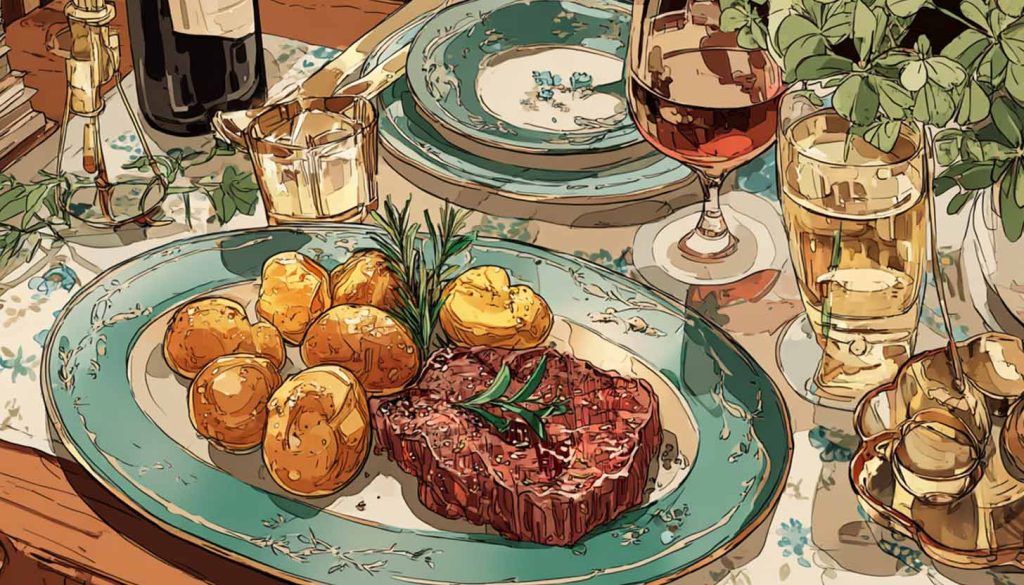
Secondo Piatto —The Second Course
Pronomi indiretti / Indirect Object Pronouns
Indirect object pronouns in Italian replace the person (or sometimes thing) to whom or for whom something is done, so we don’t have to keep repeating that phrase. Think of them as the friendly messenger in the sentence — once we know who the message, gift, or action is meant for, the pronoun steps in to deliver it without making you restate the name every time.
Mi (to me)
Ti (to you)
Gli (to him)
Le (to her)
Ci (to us)
Vi (to you all)
Loro / Gli (to them)*
*Both gli and loro can mean “to them” in Italian. Gli (singular form that also works for plural) has gradually replaced loro in modern spoken Italian because it’s shorter, smoother, and easier to fit into a sentence. Loro is still correct, but today it sounds more formal or old-fashioned, and it always comes after the verb (e.g., Ho dato loro i libri). Think of it this way: gli is the everyday, practical choice, while loro is reserved for formal writing or more elegant contexts.
Esempi / Examples using Indirect Object Pronouns
Without pronoun:
Scrivo una lettera a Lucia.
I write a letter to Lucia.
With pronoun:
Le scrivo una lettera.
I write (to) her a letter.
Without pronoun:
Do un regalo a Marco.
I give a gift to Marco.
With pronoun:
Gli do un regalo.
I give (to) him a gift.
Without pronoun:
Portiamo i biscotti ai nonni.
We bring cookies to the grandparents.
With pronoun:
Gli portiamo i biscotti.
We bring (to) them cookies.

Mini storia con pronomi indiretti
Mini story with indirect object pronouns
Di solito, prima delle cene con gli amici, mando sempre un messaggio a mia cugina Lucia, la più organizzata di tutti, per dirle di portare un vino speciale. Questa volta, però, ho mandato un messaggio al mio migliore amico Paolo. Gli ho scritto: “Regalarmi il Chianti, quello che ci piace tanto!” Gli ho detto anche di non dimenticare di portare con sé la sua ragazza Anna. Poi gli ho ricordato di dirle: “Vieni affamata e assetata!”
Usually, before dinners with my friends, I always send a message to my cousin Lucia, the most organized of all, to tell her to bring a special wine. This time, however, I sent a message to my best friend Paolo. I wrote him: “Gift me with the Chianti, the one we like so much!” I also told him not to forget to bring his girlfriend Anna with him. Then I reminded him to tell her: “Come hungry and thirsty!”
Quando sono arrivati tutti, Lucia mi ha portato due bottiglie di vino e Paolo ha portato la sua fidanzata e il buon Chianti. Durante la serata, Paolo mi racconta sempre storie divertentissime e quella notte mi ha fatto ridere fino alle lacrime. Gli ho offerto un pezzo di torta, ma lui mi ha detto che era già sazio. Lucia invece — che adora i dolci — le ho servito due pezzi di torta e le ho promesso che la prossima volta le preparerò anche una crostata alla marmellata.
When everyone arrived, Lucia brought me fresh two bottle of wine, and Paolo brought his girlfriend and the good Chianti. During the evening, Paolo always tells me hilarious stories, and that night he made me laugh until I cried. I offered him a piece of cake, but he told me he was already full. Lucia, on the other hand — who loves sweets — I served her two pieces of cake and promised her that next time I would also make her a jam tart.
Indirect Object Pronoun grammar twist
to keep you on your toes!
You’ll most often bump into Indirect Object Pronouns when using the ever-popular piacere — i.e. to me something is pleasing — but they also cozy up to plenty of other Italian favorites like:
Dare (to give)
Dire (to tell)
Scrivere (to write)
Mandare (to send)
Regalare (to gift)
Portare (to bring)
Offrire (to offer)
Rispondere (to answer)
Telefonare (to call)
Parlare (to speak)
Chiedere (to ask)
Manca(re) (to miss)
Servire (to be useful/needed)
And here’s a bonus to sweeten the deal: unlike Direct Object Pronouns, in the past tense usage of Indirect Pronouns the past participle does not change to agree in gender or number with the pronoun. So whether you say mi ha scritto or ci ha mandato un invito, the verb keeps its cool and stays exactly the same.

Pieni, Soddisfatti! E adesso il dolce—pronomi combinati!
Full, Content! And now dessert— Combined Object pronouns!
Siete stati ospiti così fantastici che siete cordialmente invitati a tornare per il dessert — i pronomi combinati! Dopo aver metabolizzato i pronomi diretti e indiretti, è arrivato il momento del capolavoro dei dessert: imparare a servirli insieme nella stessa frase. Immagina di dire a Lucia: “Te la preparo domani.” Vedi? Un solo boccone dolce, due pronomi, nessuna ripetizione. 🍰 State sintonizzati — il piatto migliore deve ancora arrivare!
You’ve been such wonderful dinner guests that you’re cordially invited back for dessert — combined pronouns! After digesting direct and indirect pronouns, it’s time for the capolavoro dei dessert: learning how to serve them together in the same sentence. Imagine saying to Lucia: “Te la preparo domani” — “I’ll make it for you tomorrow.” See? One sweet bite, two pronouns, no repetition. 🍰 Stay tuned — the best course is still to come!
🇮🇹 Un consiglio dalla Matta 🇮🇹
Matta Italian Language Tip!

Using Italian Direct Object Pronouns in the Past
When using Direct Object Pronouns in the past tense, think of the past participle like a well-mannered dinner host — it always agrees with the guest who arrived first! If lo, la, li, or le come before the verb, the participle changes to match their gender and number. Example: Ho mangiato la torta → L’ho mangiata. Just remember: pronoun first, participle dressed to match!
Using Italian Indirect Object Pronouns in the Past
When you’re using Indirect Object Pronouns in the past tense, take a deep breath… and sip another glass of wine. Unlike Direct Object Pronouns, there’s no need to fuss with changing the past participle to agree in gender or number. Whether you say mi ha scritto, ci ha telefonato, or gli ha mandato un messaggio, the participle stays exactly the same. So relax — your Italian just got simpler, and you can enjoy dessert without grammar indigestion.
Another Matta Tip: If you’d like to print or create a PDF of this post you can easily do so using the Chrome Browser Extension —-> GoFullPage! It works beautifully!









Ciao Melissa, come stai ?
I really find these articles of yours tremendously helpful and much easier to remember than in a grammar book.
However I am a little confused in the sentence in the Indirect Object pronoun
Gli portiamo i biscotti, why Gli if it is to “ them” I would have written “ Loro “ ?
Abbracci Carol
Ciao Carol! Sto benissimo. Sono contenta che ti piacciano questi post sui pronomi italiani…. ho appena pubblicato “Reflexive Pronouns in Italian: Your Grammar Aperitivo with Studentessa Matta.”
(https://www.studentessamatta.com/italian-reflexive-pronouns-aperitivo-grammar-lesson/)
Hai posto un’ottima domanda! Sei molto attenta, brava! Ecco la risposta (e ho appena aggiornato il post sopra con questa nota):
Both gli and loro can mean “to them” in Italian. Gli (singular form that also works for plural) has gradually replaced loro in modern spoken Italian because it’s shorter, smoother, and easier to fit into a sentence. Loro is still correct, but today it sounds more formal or old-fashioned, and it always comes after the verb (e.g., Ho dato loro i libri). Think of it this way: gli is the everyday, practical choice, while loro is reserved for formal writing or more elegant contexts.