Piccole Parole Italiane che Fanno un Grande Lavoro: Pronomi Indiretti
How to Use Italian Indirect Object Pronouns (mi, ti, gli, le, ci, vi) with Confidence
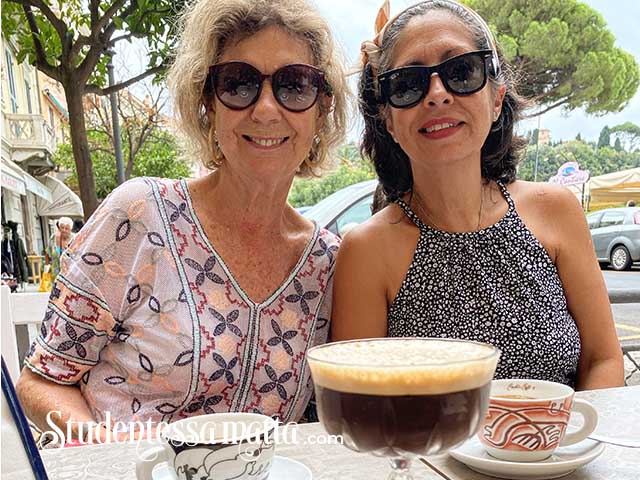
Tramonto toscano. Spritz alla mano. Pronomi indiretti in arrivo.
Tuscan sunset. Spritz in hand. Indirect object pronouns on the way.
Sono felice di dirvi che sono arrivata sana e salva ad Arezzo dopo un viaggio senza intoppi. Tutto è andato liscio come l’olio! Sono qui da una settimana e sto ritrovando amici, riprendendo le mie abitudini italiane e sistemando le cose nel mio appartamento, dietro l’angolo di Piazza Grande.
I’m happy to tell you that I arrived safely in Arezzo after a smooth trip. Everything went like clockwork! I’ve been here for a week now, reconnecting with friends, settling back into my Italian routines, and organizing things in my apartment just around the corner from Piazza Grande.
Ho già fatto tutte le commissioni indispensabili: ho sistemato l’armadio, metto via la valigia, sono andata al supermercato per comprare gli ingredienti per le mie cene casalinghe, il sapone per il bucato e tutte quelle piccole cose che trasformano un appartamento in una casa…e vino naturalmente!
I’ve already checked off all the essential settling-in tasks: unpacked my suitcase, organized my closet, and made a trip to the supermarket for ingredients for home-cooked dinners, laundry detergent, and all those little things that make an apartment feel like home… and wine, naturally!
Certamente mi sono dedicata anche allo shopping della categoria “divertimento”. Diciamoci la verità: è impossibile resistere alle vetrine del centro storico! Ogni mattina passo davanti a negozi pieni di scarpe, vestiti e oggetti curiosi mentre vado alla scuola con cui collaboro, Cultura Italiana, in Piazza San Jacopo.
Of course, I’ve done the more “fun” kind of shopping too. Let’s be honest: it’s impossible to resist the shop windows in the historic center! Every morning I walk past displays filled with shoes, clothing, and tempting treasures on my way to Cultura Italiana language school in Piazza San Jacopo.
Tra poco arriverà il nuovo gruppo di studenti del Programma Matta 2026, e non vedo l’ora di condividere con loro un’altra avventura linguistica italiana.
Soon the new group of students for the 2026 Matta Program will arrive, and I can’t wait to share another Italian language adventure with them.
Nel frattempo continuo a insegnare online e sto lavorando a un progetto molto speciale: un nuovo libro che sarà pubblicato alla fine dell’anno.
Meanwhile, I’m still teaching online and working on a very special project: a new book that will be published later this year.
E sì… vi giuro che sto cercando di staccare la spina! Quando finisco di lavorare, chiudo il mio “ufficio”, vado al prato dietro il Duomo, mi godo il panorama e mi concedo uno spritz.
And yes… I promise I’m trying to unplug! When work is done, I close my “office,” head to the grassy area behind the cathedral, enjoy the view, and treat myself to a spritz.

Una domanda grammaticale davanti a uno spritz
A Grammar Question Over a Spritz
Ieri, mentre guardavo il panorama, pensavo a una domanda che uno dei miei studenti mi aveva fatto qualche giorno fa sui pronomi indiretti.
Yesterday, while admiring the view, I found myself thinking about a question one of my students had asked me a few days earlier about indirect object pronouns.
Così ho deciso di scrivere un piccolo articolo per aiutare tutti a capire meglio come funzionano queste piccole pesti della grammatica italiana.
So I decided to write a little article to help everyone better understand these tiny troublemakers of Italian grammar.

Prima di tutto: la differenza tra i pronomi diretti e i pronomi indiretti.
First of All: The Difference Between Direct & Indirect Object Pronouns.
Probabilmente conoscete già i pronomi diretti: lo, la, li, le. Questi sostituiscono una persona o una cosa che riceve direttamente l’azione del verbo.
You probably already know direct object pronouns: lo, la, li, le. These replace a person or thing directly receiving the action of the verb.
Compro il libro. → Lo compro.
Vedo le ragazze. → Le vedo.
PRONOMI INDIRETTI: Da “a lui” a “gli”
INDIRECT OBJECT PRONOUNS: From “To Him” to “Gli”
I pronomi indiretti, invece, sostituiscono una persona introdotta dalla preposizione a.
Indirect object pronouns, on the other hand, replace a person introduced by the preposition “a.”
Parlo a Laura —–> I speak to Maria
Parlo al professore. —–> I speak to the professor
Parlo a lui. —–> I speak to him
Parlo a lei. —–> I speak to her
Parlo a noi —–> I speak to us
Parlo a voi —–> I speak to you all
In italiano possiamo mantenere la costruzione con a + persona, ma molto più spesso utilizziamo un pronome indiretto.
In Italian we can keep the structure with “a + person,” but much more often we use an indirect object pronoun.
| Pronome | Significato |
| Mi | to me |
| Ti | to you |
| Gli | to him |
| Le | to her |
| Ci | to us |
| Vi | to you all |

E “a loro” (come…parlare loro)?
And What About “To Them” (as in talking to them)?
Qui le cose diventano interessanti. La forma tradizionale è: Ho detto loro la verità. Notate che loro normalmente segue il verbo e non c’è la preposizione “a”.
This is where things get interesting. The traditional form is: Ho detto loro la verità. I told them the truth. Notice that “loro” normally comes after the verb and there is no preposition “a”.
Ma nella lingua parlata sentirete molto spesso: Gli ho detto la verità. Questo gli plurale è ormai comunissimo nell’italiano parlato.
But in the spoken language you will often here: Gli ho detto la verità. I told them the truth.
This plural “gli” is now extremely common in spoken Italian.

Quando usiamo i pronomi indiretti? Quando diamo i fiori naturalmente!
When To Use Indirect Object Pronouns? When we give flowers of course!
Imparare i pronomi in sé è abbastanza semplice. La parte più difficile è capire quali verbi italiani li richiedono naturalmente. Ecco una breve lista di verbi comuni che spesso usano i pronomi indiretti:
Learning the pronouns themselves is fairly straightforward. The trickier part is knowing which Italian verbs naturally call for them. Here’s a short list of common verbs that often use indirect object pronouns:
Verbi di dare e offrire
Verbs of Giving and Offering
dare → Gli do un libro.
regalare → Le regalo dei fiori.
offrire → Ti offro un caffè.
prestare → Mi presti la tua penna?
consegnare → Hanno consegnato loro i documenti.
mandare/spedire → Ci hanno mandato una cartolina.
Verbi di comunicazione
Verbs of Communication
dire → Ti dico la verità.
raccontare → Gli racconti la storia.
spiegare → Le ho spiegato la lezione.
chiedere → Vi chiedo un favore.
rispondere → Hanno risposto subito.
telefonare → Mi ha telefonato ieri sera.
accennare → Gli ho accennato il problema.
Verbi di mostrare e insegnare
Verbs of Showing and Teaching
mostrare → Ti mostro le foto.
insegnare → Gli insegno l’italiano.
Alcuni verbi che sorprendono sempre gli studenti
Some Verbs That Always Surprise Students
Molti verbi comuni richiedono il pronome indiretto anche se per gli anglofoni non è immediatamente evidente.
Many common verbs require an indirect object pronoun even though this isn’t always obvious to English speakers.
Mi sembra una buona idea.
Ci manca molto la nonna.
Ti serve una mano?
Gli interessa la politica.
Non mi basta il tempo.
Ci dispiace per l’incidente.
Mi è successo qualcosa di strano.
Ti capita spesso di viaggiare?

Il primo pronome indiretto che avete imparato senza saperlo.
The First Indirect Object Pronound You Learned Without Realizing It.
C’è una buona probabilità che il primo pronome indiretto che abbiate mai usato in italiano sia stato con il verbo piacere.
There’s a good chance that the first indirect object pronoun you ever used in Italian was with the verb “piacere.”
Mi piace il gelato.
I like icecream
Ti piacciono le canzoni italiane.
You like Italian songs.
fyi: multiple things liked — take “piacicono” (they are liked to me)
Le piace viaggiare.
She likes traveling
Per un madrelingua inglese questa costruzione sembra strana, perché in inglese “we like things.”
For an English speaker, this construction feels unusual because in English “we like things.”
In Italian, the idea is closer to: “The thing is pleasing to me.” For this reason we say: Mi piace il gelato. Literally: “Il gelato piace a me” — Ice cream is pleasing to me.

Piccoli pronomi, grande potere
Small Pronouns, Big Power
I pronomi indiretti sono piccoli, ma fanno un lavoro enorme. Una volta che iniziate a notarli, vi accorgerete che sono dappertutto: nelle conversazioni quotidiane, nei film, nei libri e persino nelle canzoni italiane.
Indirect object pronouns are tiny, but they do a tremendous amount of work. Once you start noticing them, you’ll realize they’re everywhere: in everyday conversations, movies, books, and even Italian songs.
La prossima volta che sentite qualcuno dire: Ti telefono. Gli parlo. Le scrivo. Mi piace.
So the next time you hear someone say: I call you. I talk to him. I like it.
Fermatevi un momento e fatevi i complimenti.… avete appena riconosciuto uno dei piccoli ingranaggi che fanno funzionare la macchina della lingua italiana.
Pause for a moment and congratulate yourself. You’ve just spotted one of the tiny gears that keeps the beautiful machine of Italian running.
🇮🇹 Un consiglio dalla Matta 🇮🇹
Matta Italian Language Tip!

A little trick that will make indirect object
pronouns much less intimidating
Don’t learn only the verb. Learn its traveling companion too.
The secret to remembering when to use indirect object pronouns — Learn verbs in packages, not in isolation. When learning a new Italian verb, don’t memorize only what it means. Learn the pattern that goes with it.
If the verb naturally requires “to someone”, it will probably use an indirect object pronoun in Italian.
Parlare → to speak to someone
Telefonare → to telephone “TO” someone
Rispondere → to answer someone
Scrivere → to write to someone
Dire → to say to someone
Chiedere → to ask someone for something
The more you learn verbs together with their prepositions and sentence patterns, the less you’ll have to think about grammar rules and you will naturally start saying: