Come chiedere scusa davvero in italiano—
senza usare parole ingannevoli né darsi troppe arie
How to truly apologize in Italian—without misleading words or too much attitude
Quando una parola ti tradisce proprio nel momento del bisogno
When a word betrays you at exactly the wrong moment
A volte, quando impariamo una nuova lingua, ci lasciamo tentare da quelle parole che sembrano inglesi, suonano quasi inglesi e ci fanno pensare: “Perfetto, questa la so!” E invece… no. Proprio lì si nasconde il pericolo. Bisogna stare attenti e studiare bene il vocabolario, perché certe parole apparentemente familiari sono dei veri false friends—e possono farti inciampare in una figuraccia memorabile.
Sometimes, when we’re learning a new language, we’re tempted by words that look English, sound almost English, and make us think: “Perfect, I know this one!” And yet… no. That’s exactly where the danger hides. You have to be careful and study vocabulary well, because some seemingly familiar words are true false friends—and they can make you stumble into a memorable embarrassment.
Mettiamo il caso che tu abbia appena fatto una gaffe. Hai detto la cosa sbagliata, hai usato il tono sbagliato, oppure—peggio ancora—hai cercato di fare bella figura e hai ottenuto l’effetto opposto. A questo punto vuoi chiedere scusa. Ma quale parola scegli?
Let’s say you’ve just made a gaffe. You said the wrong thing, used the wrong tone, or—worse yet—tried to make a good impression and got the opposite result. At that point, you want to apologize. But which word do you choose?
Un’apologia / A defense

“Un’apologia” non è “an apology”: il falso amico che complica tutto
“Un’apologia” is not an apology: the false friend that complicates everything
L’istinto di un madrelingua inglese potrebbe essere quello di scegliere la parola apologia, pensando che significhi “apology.” Sembra perfetta, no? Ma in italiano, un’apologia non è una richiesta di perdono. È una difesa, una giustificazione, o addirittura un discorso in favore di qualcosa o qualcuno.
To apologize, an English speaker’s instinct might be to choose the Italian word “apologia,” thinking it means “apology.” It looks perfect, right? But, in Italian, un’apologia is not a request for forgiveness. It is a defense, a justification, or even a speech in favor of something or someone.
Quindi, se dopo aver combinato un pasticcio te ne esci con una frase che contiene apologia, un italiano potrebbe restare molto confuso. Invece di capire che sei pentito, potrebbe pensare che tu stia ancora cercando di difendere quello che hai fatto. Non proprio l’effetto desiderato.
So if, after making a mess of things, you come out with a sentence containing apologia, an Italian person may be very confused. Instead of understanding that you are sorry, they might think you are still trying to defend what you did. Not exactly the effect you were going for.
Che cosa vuol dire davvero “apologia” in italiano?
What does “apologia” actually mean in Italian?
In italiano, apologia è una parola dal tono piuttosto formale e viene usata per indicare una difesa appassionata o una giustificazione di idee, comportamenti o persone. Può avere un tono neutro in contesti letterari o filosofici, ma in altri casi può assumere anche una sfumatura negativa.
In Italian, apologia is a rather formal word used to indicate a passionate defense or justification of ideas, behaviors, or people. It may sound neutral in literary or philosophical contexts, but in other cases it can also carry a negative nuance.
Il professore ha scritto un’apologia della libertà di pensiero.
The professor wrote a defense of freedom of thought.
Il suo discorso sembrava quasi un’apologia del proprio comportamento.
His speech sounded almost like a justification of his own behavior.
Fare l’apologia di certe scelte irresponsabili non è una buona idea.
Defending certain irresponsible choices is not a good idea.
Come vedi, qui non c’è nessuna scusa. Anzi, c’è quasi il contrario:
c’è qualcuno che prende posizione e difende.
As you can see, there is no apology here at all. In fact, it’s almost
the opposite: someone is taking a stand and defending something.
Scusarsi / To apologize
Allora, come si chiede scusa davvero in italiano?
So, how do you actually apologize in Italian?
Per chiedere perdono in italiano, hai a disposizione diverse espressioni, da quelle più semplici e quotidiane a quelle più eleganti e formali.
To ask forgiveness in Italian, you have several expressions available, from the simplest everyday ones to the more elegant and formal ones.
Scusarsi / To apologize
Scusarsi is the reflexive verb meaning to apologize. When you want to state clearly that you are apologizing, Italian uses the reflexive form:
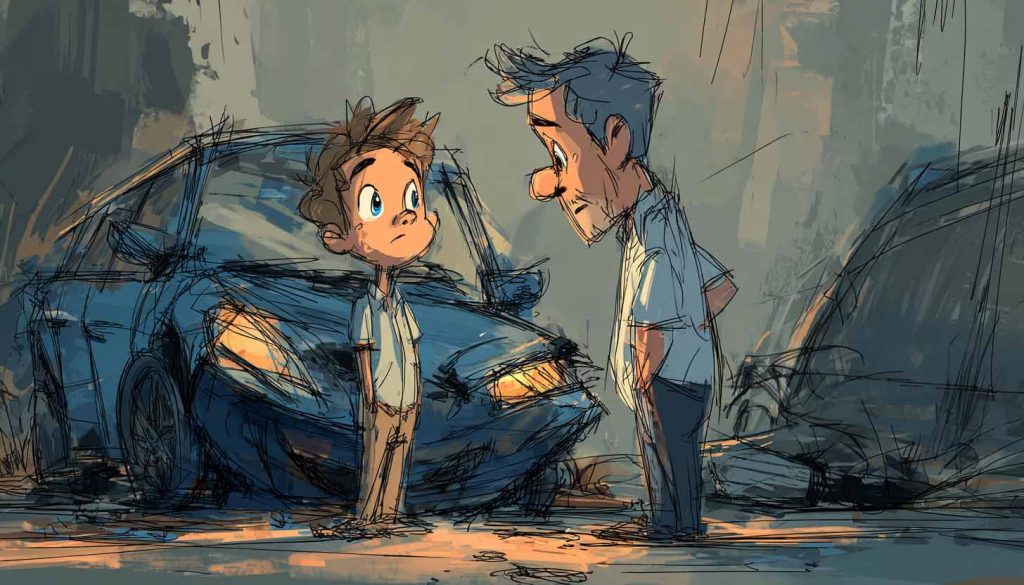
Mi scuso per aver distrutto la tua macchina ieri sera, papà.
I’m sorry for wrecking your car last night, Dad.
++++++++++++++++++++
Vorrei scusarmi per il mio comportamento irresponsabile.
I would like to apologize for my irresponsible behavior.
++++++++++++++++++++
Chiedere scusa — To ask forgiveness
also widely used—direct, natural, and perfect in many situations
Papà, ti chiedo scusa per aver distrutto la macchina ieri sera.
Dad, I’m sorry for wrecking the car last night.
Vi chiedo scusa per il malinteso.
I apologize for the misunderstanding.
++++++++++++++++++++
porgere le proprie scuse — To extend your excuses
If you want to elevate the register a bit and use something more formal
Desidero porgere le mie scuse per l’inconveniente.
I wish to offer my apologies for the inconvenience.
L’azienda ha porto le proprie scuse ai clienti.
The company offered its apologies to its customers.
++++++++++++++++++++
fare le proprie scuse molto sentite — To Show Sincere/Heartfelt Regret
if you really want to show sincere regret, you can use stronger phrases
Ti presento le mie più sentite scuse.
Please accept my sincerest apologies.
Vorrei fare le mie proprie scuse più sentite per il mio comportamento.
I would like to offer my most heartfelt apologies for my behavior.
command form of reflexive Scusarsi
scusami, mi scusi, scusa!, and scusate!
In everyday Italian, the imperative forms of scusarsi—scusami and mi scusi—are commonly used to apologize or to say “excuse me” in the moment. These forms can be used in both informal and formal speech.
Familiar / informal (tu):
Scusami!
Excuse me! Sorry!
Polite / formal (Lei:)
Mi scusi!
Excuse me!
If you are speaking to more than one person—for example, while making your way through a crowd or pushing through a bus full of people—you can say:
Scusatemi!
Excuse me, everyone!
Note: Scusa! is the informal command of scusare, not the reflexive scusarsi. Italians use it as a quick, natural expression in everyday situations—when they bump into someone, interrupt, or want to politely get someone’s attention. In these cases, scusa!, scusi!, and scusate! all function as immediate ways to say “Excuse me!” or “Sorry!”
Familiar / informal (tu):
Scusa!
Excuse me!
Formal / Lei:
Scusi!
Excuse me!
Scusate!
Excuse me, everyone!
Qualche altro “False Friends”
A few more “false friends”

Fare il Prezioso / Darsi delle arie
To act snobbish – Put on airs
Quando sembri gentile… ma in realtà sei snob: “fare il prezioso” e “darsi delle arie”
Think you sound charming… but you actually sound snobbish: “fare il prezioso” and “darsi delle arie”
Ed eccoci ad altri due deliziosi trabocchetti linguistici. L’espressione fare il prezioso potrebbe sembrare positiva a un anglofono. Uno potrebbe pensare: “Prezioso? Che bello! Vuol dire essere gentile, carino, speciale…” In realtà “Fare il prezioso” significa comportarsi in modo affettato, fare il difficile, tirarsela un po’, come se si fosse troppo importanti per partecipare normalmente alla vita degli altri.
And here we are with two more delightful linguistic traps. The expression fare il prezioso might sound positive to an English speaker. On“e might think: “Precious? How lovely! It must mean being kind, sweet, special…” But actually “Fare il prezioso” means acting affected, playing hard to get, or behaving as though one is a little too important to engage normally with others.
Ancora più divertente è l’espressione darsi delle arie. A prima vista, un anglofono potrebbe pensare a qualcosa di poetico, quasi salutare—tipo “darsi aria,” prendersi respiro, concedersi un momento. Ma no: darsi delle arie significa darsi importanza, assumere un atteggiamento altezzoso, comportarsi come se si fosse superiori agli altri.
Even more amusing is the expression darsi delle arie. At first glance, an English speaker might think of something poetic, even healthy—like “getting some air,” taking a breath, giving yourself space. But no: darsi delle arie means putting on airs, acting superior, or behaving as though you’re above everyone else.
Fare il Prezioso
To act SNobbish
Dai, non fare il prezioso e vieni con noi a cena.
Come on, don’t be so difficult—come to dinner with us.
Ha fatto la preziosa per tutta la serata.
She acted stuck-up all evening.
++++++++++++++++++++
Darsi delle arie
To put on airs / act Snobbish
Da quando ha cambiato lavoro, si dà un sacco di arie.
Ever since changing jobs, he’s been putting on a lot of airs.
Non sopporto chi si dà delle arie senza motivo.
I can’t stand people who act stuck-up for no reason.
++++++++++++++++++++
Insomma: pensavi di sembrare affascinante, misterioso o raffinato… e invece stavi solo risultando insopportabile. A quel punto, sì, conviene davvero chiedere scusa.
So basically: you thought you sounded charming, mysterious, or refined… but instead you were just coming across as unbearable. At that point, yes, it really is time to apologize.
Evidenza vs. le Prove
Highlighting vs. Proof
Vuoi dimostrare che sei sincero? Attenzione a “evidenza”
Want to prove you’re sincere? Be careful with “evidenza”
Dopo esserti scusato, magari vuoi anche presentare qualche “evidence” per dimostrare che sei sincero. E qui—sorpresa!—spuntano di nuovo i false friends.
After apologizing, maybe you also want to present some “evidence” to prove that you’re sincere. And here—surprise!—the false friends show up again.
In italiano, evidenza non significa “proof” nel senso inglese di prova concreta. Evidenza indica piuttosto ciò che è evidente, ciò che risalta, ciò che viene messo in luce o sottolineato.
In Italian, evidenza does not mean “proof” in the English sense of concrete proof. Evidenza refers instead to what is evident, what stands out, what is highlighted or brought into focus.
Evidenza
Something highlighted, Brought into focus
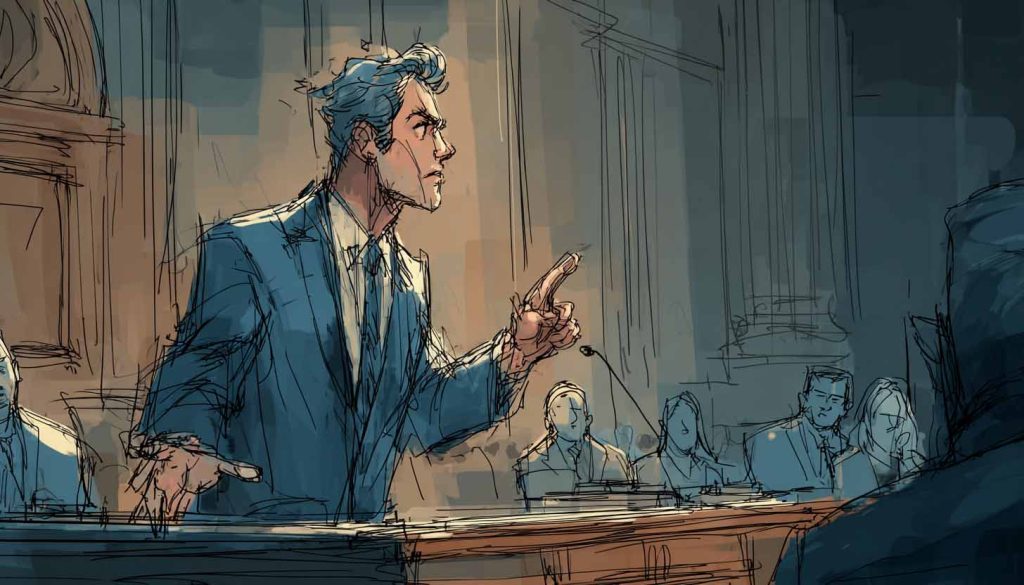
Oggi in tribunale l’arroganza dell’avvocato era in piena evidenza.
Today in court the lawyer’s arrogance was fully evident.
Vorrei evidenziare un punto importante.
I would like to highlight an important point.
Il giornale ha messo in evidenza il problema.
The newspaper highlighted the problem.
++++++++++++++++++++
Le Prove
Proof
L’avvocato ha presentato le prove in tribunale per difendere il suo cliente.
The lawyer presented the evidence in court to defend his client.
L’avvocato sostiene di avere le prove che il suo cliente è innocente.
The lawyer claims to have proof that his client is innocent.
++++++++++++++++++++
Quindi, se vuoi convincere qualcuno che il tuo pentimento è sincero, non portare “evidenza”: porta le prove.
So if you want to convince someone that your regret is sincere, don’t bring “evidenza”: bring le prove.

Le parole sembrano amiche… finché non ti fanno fare una figuraccia
Words seem friendly… until they make you embarrass yourself
Questa è una delle cose più divertenti—e più pericolose—dello studio dell’italiano: ci sono parole che ti fanno l’occhiolino perché sembrano familiari, e proprio per questo ti fregano. Ma è anche uno degli aspetti più affascinanti della lingua: ogni errore, ogni fraintendimento, ogni piccola figuraccia diventa un’occasione per capire meglio non solo il vocabolario, ma anche il modo di pensare degli italiani.
This is one of the funniest—and most dangerous—things about studying Italian: there are words that wink at you because they look familiar, and that’s exactly why they trick you. But it’s also one of the most fascinating aspects of the language: every mistake, every misunderstanding, every little embarrassment becomes an opportunity to better understand not just vocabulary, but also the Italian way of thinking.
Quindi la prossima volta che combini un pasticcio, niente panico. Niente apologia. Respira, scegli le parole giuste, chiedi scusa con sincerità… e magari evita anche di fare il prezioso mentre lo fai.
So the next time you make a mess of things, don’t panic. No apologia. Take a breath, choose the right words, apologize sincerely… and maybe avoid acting stuck-up while you do it.
🇮🇹 Un consiglio dalla Matta 🇮🇹
Matta Italian Language Tip!

Misleading words, too much attitude,
and how to truly apologize in Italian.
Remember this trick:
if an Italian word seems “too easy” because it looks like An English Word , pause for a second and check it.
It might be a false friend just waiting to embarrass you!
If you made a mistake, you can say:
Scusami, Ti chiedo scusa, Mi dispiace, Ti porgo le mie scuse,
Ti presento le mie più sentite scuse.
If instead you use words like apologia thinking you
are apologizing, you risk getting the opposite effect.
++++++++++++++++++++++++++
If someone tells you that you “fare il prezioso” or
“darti delle arie,” it is not a compliment.
++++++++++++++++++++++++++
And if you want to present “proof,” remember:
in Italian you need le prove, not l’evidenza.
Another Matta Tip: If you’d like to print or create a PDF of this post you can easily do so using the Chrome Browser Extension —-> GoFullPage! It works beautifully!