Le mille sfumature di dovere (e come smettere di guardarlo con occhi vitrei)
All the shades of dovere (and how to stop staring at it with glassy eyes)
Imparare l’Italiano va così: un giorno “capisco tutto”, il giorno dopo… boh
Learning Italian goes like this: one day “I understand everything,” the next day… huh?
Imparare l’italiano è bellissimo: ti apre porte, amicizie, viaggi, film senza sottotitoli e quella soddisfazione del “Capisco!”. Ma—diciamolo—può essere anche scoraggiante. Ci sono giorni in cui ti senti in cima al mondo, e altri in cui le cose imparate ti sono fuggite di mente proprio nel momento del bisogno. Ti vengono gli occhi vitrei, inizi a grattarti la testa e pensi: “Ma come faccio a mettere insieme tutto?”
Learning Italian is wonderful: it opens doors, friendships, travel, films without subtitles, and that “I get it!” feeling. But—let’s be real—it can also be discouraging. Some days you feel on top of the world, and other days what you learned vanishes from your mind right when you need it. You get glassy-eyed, you scratch your head, and you think: “How do I make sense of all this?”
Ecco la buona notizia: ti capisco benissimo. Io continuo a raffinare il mio italiano ogni singolo giorno. E proprio recentemente ho fatto un bel ripasso di DOVERE—un verbo utilissimo, pieno di sfumature, e (sì) un po’ “traditore” se lo affronti senza mappa.
Here’s the good news: I totally get it. I keep refining my Italian every single day. And recently I did a solid review of DOVERE—a super useful verb full of nuance, and (yes) a bit “tricky” if you tackle it without a map.
Quindi oggi facciamo ordine, con calma e chiarezza. Vedrai come usare dovere in modo naturale—non solo per dire “devo”, ma anche per esprimere pressione, consiglio, rimpianto e deduzioni logiche (tipo Commissario Ricciardi il mio preferito detective italiano in trench).
So today we’ll tidy it all up, calmly and clearly. You’ll see how to use dovere naturally—not only to say “I must,” but also to express pressure, advice, regret, and logical deductions (like il Comissario Ricciardi my favorite Italian detective in a trench coat).
⚠️Nota Matta (importante): questo post è pensato per studenti avanzati di italiano, cioè per chi ha già dimestichezza con i tempi del passato più complessi (come il trapassato prossimo) e con il condizionale. Se sei agli inizi, consideralo un piccolo assaggio di ciò che arriverà più avanti—quindi non scoraggiarti: anche solo riconoscere queste forme oggi è già un enorme passo.
⚠️ Matta note (important): this post is designed for advanced Italian learners—those who already feel comfortable with more complex past tenses (like the trapassato prossimo) and the conditional. If you’re newer to Italian, think of this as a little preview of what’s coming—so don’t be discouraged: even recognizing these forms today is already a big win.
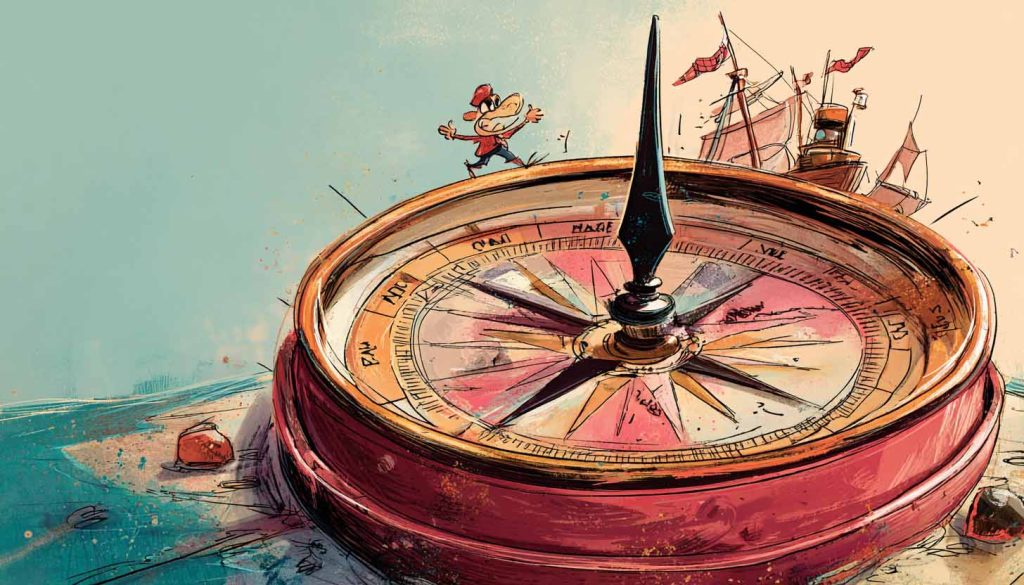
La bussola: due famiglie di significato di DOVERE
The compass: two main meanings of DOVERE
PRIMO SIGNIFICATO
Obligation / necessity / moral duty / owing something
(I must / I have to / I should)
SECONDO SIGNIFICATO
Deduction / assumption
(It must be / He must have / She was probably…)
Tieni questa idea in tasca: ti aiuta a capire subito perché a volte dovere non significa “dovere” nel senso di obbligo… ma “deve essere” nel senso di ipotesi.
Keep this idea in your pocket: it helps you understand right away why sometimes dovere doesn’t mean obligation… but rather “it must be” as a logical guess.

DOVERE: Il PRIMO SIGNIFICATO
Obligation / necessity / moral duty / owing something
(I must / I have to / I should)
Numero 1
DEVO + infinito (obbligo presente)
DEVO + infinitive (present obligation)
Usalo quando adesso hai un obbligo, una necessità o un compito. È diretto, quotidiano, pratico.
Use it when right now you have an obligation, necessity, or task. It’s direct, everyday, practical.
Devo studiare per la lezione di domani.
I have to study for tomorrow’s lesson.
Devo andare in farmacia.
I need to go to the pharmacy.
Devo finire questo lavoro entro stasera.
I must finish this work by tonight.
Numero 2
DOVEVO + infinito (pressione/aspettativa nel passato, “dovevo ma…” )
DOVEVO + infinitive (past ongoing pressure/expectation, “I was supposed to…”)
Qui entra l’imperfetto: spesso non è solo “obbligo nel passato”, ma anche pressione, aspettativa, programma, oppure qualcosa che “stava lì” come dovere… senza sapere se poi l’hai fatto davvero.
Here comes the imperfect: it’s often not just “obligation in the past,” but pressure, expectation, a plan, or something that “hung in the air” as a duty… without saying whether you actually did it.
Dovevo chiamarti, ma mi sono distratta.
I was supposed to call you, but I got distracted.
Dovevo consegnare tutto lunedì.
I was supposed to turn everything in on Monday.
Quando studiavo, dovevo fare esercizi ogni sera.
When I was studying, I had to do exercises every evening.
Numero 3
HO DOVUTO + infinito (obbligo completato / fatto compiuto)
HO DOVUTO + infinitive (completed obligation / done fact)
Questo è passato prossimo: l’obbligo c’era e si è concretizzato (lo hai fatto / è successo). Spesso suona come: “non avevo scelta, è andata così.”
This is passato prossimo: the obligation existed and it happened (you did it / it occurred). It often sounds like: “I had no choice, that’s how it went.”
Ho dovuto annullare la lezione.
I had to cancel the lesson.
Ho dovuto ripetere la spiegazione tre volte. (classico 😅)
I had to repeat the explanation three times.
Abbiamo dovuto cambiare programma all’ultimo minuto.
We had to change plans at the last minute.
Numero 4
AVEVO DOVUTO + infinito (obbligo anteriore: trapassato prossimo)
AVEVO DOVUTO + infinitive (an earlier obligation: pluperfect / trapassato prossimo)
Qui siamo nel trapassato prossimo: parli di un obbligo che era già “avvenuto” prima di un altro momento nel passato. È perfetto per racconti, spiegazioni, e per mettere in ordine gli eventi.
Now we’re in the pluperfect (trapassato prossimo): you’re talking about an obligation that had already happened before another past moment. Perfect for storytelling, explanations, and organizing events.
Avevo dovuto studiare tantissimo, quindi ero stanchissima.
I had had to study a lot, so I was exhausted.
Prima di partire, avevamo dovuto prenotare tutto con largo anticipo.
Before leaving, we had had to book everything well in advance.
Quando mi hai scritto, avevo già dovuto prendere una decisione.
When you texted me, I had already had to make a decision.
Numero 5
DOVREI + infinito (consiglio / dovere morale / “sarebbe meglio”)
DOVREI + infinitive (advice / moral obligation / “it would be better”)
Il condizionale presente rende tutto più morbido: non è un ordine, è una raccomandazione, un suggerimento (a te o a te stessa).
The present conditional softens everything: it’s not an order, it’s a recommendation, advice (to you or to yourself).
Dovrei ripassare i pronomi… (lo dico sempre anch’io!)
I should review pronouns… (I say this too!)
Dovresti bere più acqua.
You should drink more water.
Dovremmo partire un po’ prima per evitare traffico.
We should leave a bit earlier to avoid traffic.
Numero 6
AVREI DOVUTO + infinito (rimpianto / “avrei dovuto ma non l’ho fatto”)
AVREI DOVUTO + infinitive (regret / “I should have…”)
Questo è il classico “ahi”. È un dovere nel passato visto con gli occhi di oggi: rimpianto, autocritica, o semplicemente “col senno di poi”.
This is the classic “ouch.” It’s a past duty seen from today’s perspective: regret, self-criticism, or simply “in hindsight.”
Avrei dovuto studiare di più prima dell’esame.
I should have studied more before the exam.
Avrei dovuto chiamarti ieri. Scusa!
I should have called you yesterday. Sorry!
Avremmo dovuto prenotare prima.
We should have booked earlier.
Numero 7
DOVERE = “essere in debito / dovere qualcosa a qualcuno”
DOVERE = “to owe / to be indebted to someone
In questo uso, dovere non significa “dover fare” + infinito. Significa invece avere un debito (soldi, un favore, una spiegazione, un gesto) verso qualcuno. La struttura tipica è: dovere + qualcosa + a + qualcuno oppure con i pronomi: ti/mi/gli/le/vi devo…
In this use, dovere doesn’t mean “must do” + infinitive. Instead, it means to owe a debt (money, a favor, an explanation, a gesture) to someone. The typical structure is: dovere + something + to + someone, or with pronouns: I owe you / you owe me / I owe her…
Ti devo 20 euro.
I owe you 20 euros.
Devo 50 euro a Maria.
I owe Maria 50 euros.
Ti devo un favore.
I owe you a favor.
Vi devo delle scuse.
I owe you an apology.
Le devo una spiegazione.
I owe her an explanation,
Lo devo a te.
I owe it to you.
Il mio italiano? Lo devo anche alla pratica quotidiana.
My Italian? I owe it (also) to daily practice.
Quick note: when it means “to owe,” there’s often no infinitive. If you see a direct object (money, a favor, an explanation), you’re in the “debt/credit” zone.

DOVERE: Il SECONDO SIGNIFICATO: Deduzione / Deduction
Ora passiamo alla modalità “detective”: DOVERE = deduzione
Now let’s switch to “detective mode”: DOVERE = deduction —-> It must be “this way”
Numero 1
DEVE ESSERE + aggettivo/nome (deduzione presente su uno stato)
DEVE ESSERE + adjective/noun (present deduction about a state)
Qui deduci qualcosa adesso: non lo sai al 100%, ma hai indizi.
Here you infer something right now: you’re not 100% sure, but you have clues.
Non risponde… deve essere occupato.
He’s not replying… he must be busy.
Che silenzio! Deve essere domenica mattina in centro.
So quiet! It must be Sunday morning downtown.
Con quel sorriso, deve essere una buona notizia.
With that smile, it must be good news.
Numero 2
DEVE ESSERE STATO/A + aggettivo/nome (deduzione passata su uno stato)
DEVE ESSERE STATO/A + adjective/noun (past deduction about a state)
Deduci uno stato nel passato: com’era qualcuno, come si sentiva, che situazione c’era.
You infer a past state: how someone was, how they felt, what the situation was.
Ieri non ti sei fatto vedere: devi essere stato stanco.
You didn’t show up yesterday: you must have been tired.
Con tutto quel traffico, dev’essere stata una giornata pesante.
With all that traffic, it must have been a tough day.
Numero 3
DEVE AVER + participio (deduzione passata su un’azione)
DEVE AVER + past participle (past deduction about an action)
Qui deduci un’azione già avvenuta. (Nota: “aver” può diventare “avere” nel parlato: deve avere detto…).
Here you infer an action that already happened. (Note: “aver” can become “avere” in speech: deve avere detto…).
Non c’è più la torta… qualcuno deve averla mangiata!
The cake is gone… someone must have eaten it!
Ha gli occhi rossi: deve aver pianto.
Her eyes are red: she must have cried.
Non è arrivato: deve aver perso il treno.
He didn’t arrive: he must have missed the train.
Numero 4
DOVEVA + infinito (deduzione nel passato)
DOVEVA + infinitive (past deduction)
Sì, lo so: “doveva” può essere anche “era obbligato”. Ma in contesto, spesso significa “probabilmente” riferito a un momento nel passato: stai ricostruendo i fatti con logica.
Yes, I know: “doveva” can also mean “he was obligated.” But in context, it often means “probably” about a past moment: you’re reconstructing events logically.
Era tardi e non rispondeva: doveva dormire.
It was late and he wasn’t answering: he was probably asleep.
Con quel rumore, doveva essere il vicino di sopra.
With that noise, it was probably the upstairs neighbor.
To compare DOVEVA AS DEDUCTION (ABOVE)
with this with an example of “Doveva” as obligation
Da piccolo doveva andare a letto alle nove.
As a kid he had to go to bed at nine.

Se oggi ti gira la testa, domani ti sembrerà più facile
If your head is spinning today, tomorrow it’ll feel easier
Se in questo momento ti senti un po’ “occhi vitrei”… respira. Non devi imparare tutto in un giorno. Ma se cominci a riconoscere che tipo di dovere stai usando (obbligo o deduzione), metà del lavoro è fatto. E la prossima volta che qualcuno dice “Deve essere…”, tu non penserai più “oddio un dovere!”—penserai: “Ah! Sherlock mode.”
If right now you feel a bit “glassy-eyed”… breathe. You don’t have to learn everything in a day. But if you start recognizing which kind of dovere you’re using (obligation or deduction), you’ve already done half the work. And next time someone says “Deve essere…”, you won’t think “oh no, obligation!”—you’ll think: “Ah! Sherlock mode.”
🇮🇹 Un consiglio dalla Matta 🇮🇹
Matta Italian Language Tip!

Mini-riassunto “salvavita”
Quick “lifesaver” recap of DOVERE
Practicing—and actually remembering—Italian grammar can feel a little tricky (and honestly, a bit daunting) at times. But after this post, you’ll have a much clearer grasp of the many meanings and uses of DOVERE. Below is a quick mini-guide you can come back to anytime.
Write it on a Post-it and stick it right on your computer monitor. With practice and repetition, these forms will start to feel familiar… and one day you’ll catch yourself using them naturally without even thinking.
Devo = obligation now
Dovevo = past pressure/expectation (doesn’t say if you did it)
Ho dovuto = completed obligation (yes, it happened)
Avevo dovuto = obligation earlier than another past moment (pluperfect)
Dovrei = advice / it would be better
Avrei dovuto = regret
++++++++++++++++++
Deve essere = present deduction (state)
Deve essere stato/a = past deduction (state)
Deve aver + participle = past deduction (action)
Doveva = often past deduction (but can be obligation—context decides)
Another Matta Tip: If you’d like to print or create a PDF of this post you can easily do so using the Chrome Browser Extension —-> GoFullPage! It works beautifully!