Cartagine: la musica di Emanuele Aloia e imparare l’italiano in modo creativo
Cartagine: Emanuele Aloia’s music, history and Learning Italian Creatively
Un amore grande come un impero
A love as vast as an empire
Con la sua canzone Cartagine, Emanuele Aloia ci porta in un viaggio in cui l’amore non è solo un sentimento, ma una forza che attraversa il tempo. Dalla preistoria al presente, e oltre verso il futuro, l’amore si ripete, cambia volto, sopravvive alle catastrofi e ricomincia. Ispirandosi alla storia epica e al romanticismo cinematografico, Aloia trasforma la caduta dei grandi imperi in una metafora di emozioni così potenti da non avere fine.
With his song Cartagine, Emanuele Aloia takes us on a journey where love is not just a feeling, but a force that travels through time. From prehistory to the present, and onward into the future, love repeats itself, changes costumes, survives disasters, and begins again. Drawing from epic history and cinematic romance, Aloia transforms the fall of great empires into a metaphor for emotions so powerful they refuse to end.
Questo tema risuona profondamente in me, perché emerge anche nei miei romanzi, Waking Isabella ed Eternally Artemisia, dove passato e presente si intrecciano attraverso l’amore.
This theme resonates deeply with me, as it appears in my own novels, Waking Isabella and Eternally Artemisia, where past and present intertwine through love.
Cartagine: storia, mito e destino
Carthage: history, myth, and destiny
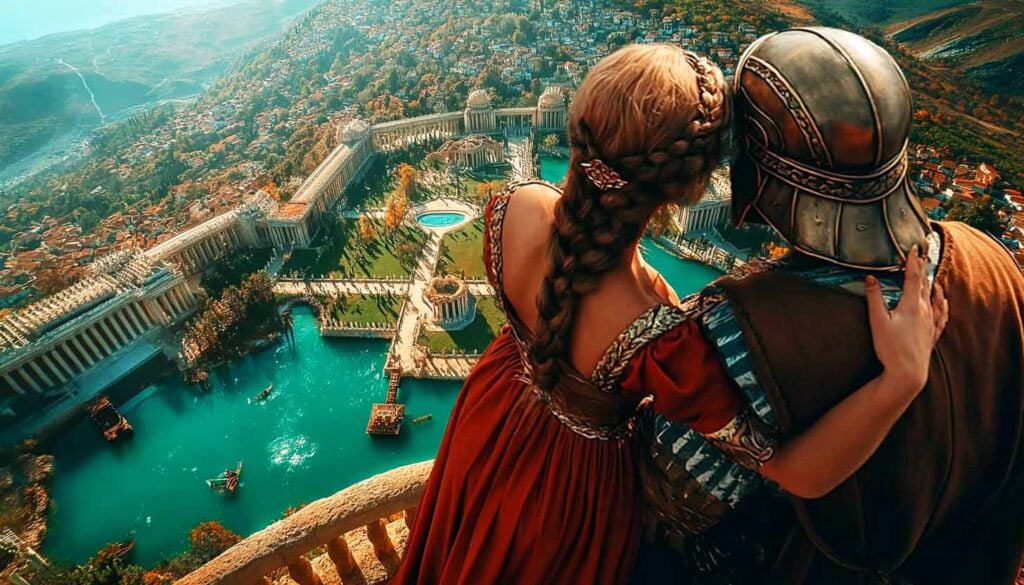
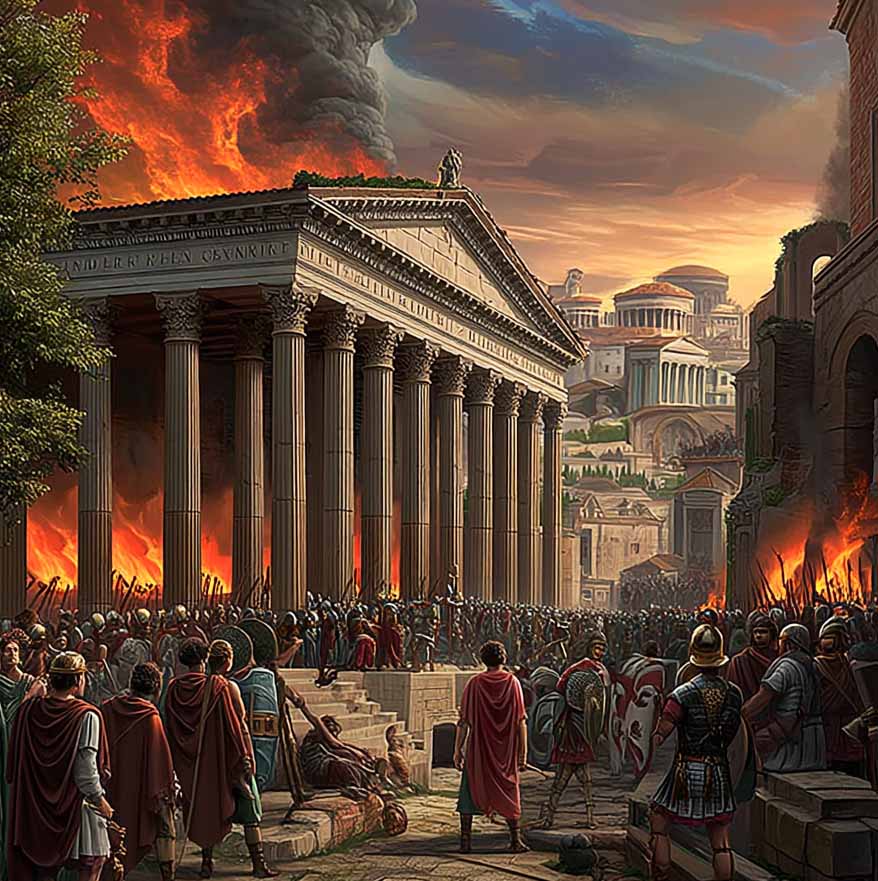
Il titolo della canzone di Aloia stesso richiama la distruzione di Cartagine, simbolo di un amore così potente da sembrare rivoluzionario. Cartagine, grande potenza del Mediterraneo, sfidò Roma prima di essere sconfitta e inglobata nella sua storia.
The title of Aloia’s song itself refers to the destruction of Carthage, symbolizing a love so powerful it feels revolutionary. Carthage was a great Mediterranean power that challenged Rome before being defeated and absorbed into its history.
Al centro del mito troviamo Didone, regina e fondatrice della città. Nell’Eneide di Virgilio, si innamora dell’eroe troiano Enea, che però la lascia per seguire il suo destino in Italia. Distrutta dal dolore, Didone si toglie la vita e maledice Enea e i suoi discendenti, gettando le basi della futura rivalità tra Roma e Cartagine.
At the heart of the myth is Queen Dido, founder of the city. In Virgil’s Aeneid, she falls in love with the Trojan hero Aeneas, who leaves her to fulfill his destiny in Italy. Heartbroken, Dido takes her own life and curses him and his descendants, foreshadowing the rivalry between Rome and Carthage.
Cartagine Di Emanuele Aloia — Watch the Music Video
Amore senza tempo
Love beyond time
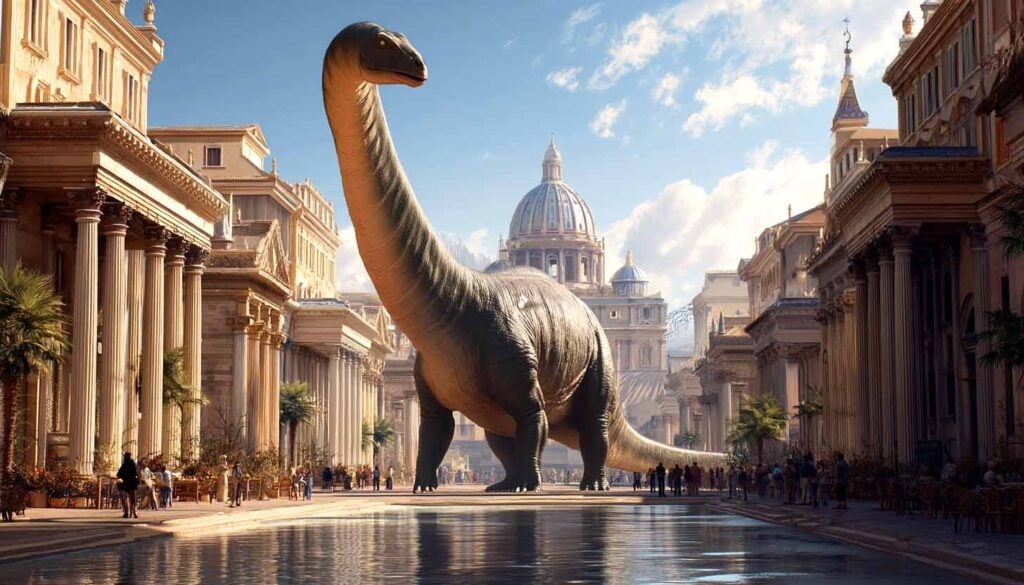
Nei versi di Aloia, momenti intimi si intrecciano con salti temporali vertiginosi: si tiene la mano, il tempo scorre… poi torna indietro. Dai giorni nostri fino alla preistoria, tra dinosauri e civiltà perdute.
In Aloia’s lyrics, intimate moments blend with dizzying jumps through time: holding hands as time moves forward… then backward. From the present day to prehistory, among dinosaurs and lost civilizations.
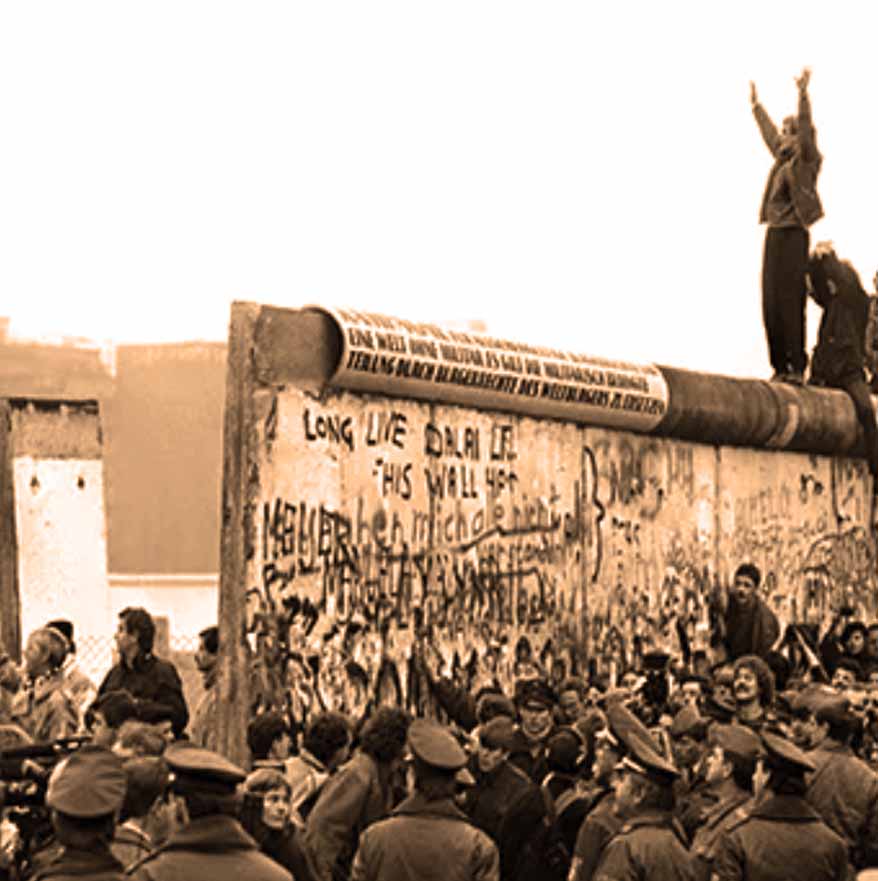
Ogni bacio diventa un simbolo universale, più forte delle guerre, capace di abbattere imperi e muri, persino il Muro di Berlino. Gli amanti sono il bacio a Times Square: eterni, sospesi, destinati a ritrovarsi ancora e ancora.
Each kiss becomes a universal symbol, stronger than wars, capable of toppling empires and walls, even the Berlin Wall. The lovers become the kiss in Times Square: eternal, suspended, destined to find each other again and again.
Leggi il testo della canzone. Read the song lyrics. [click the plus sign to expand to view lyrics]

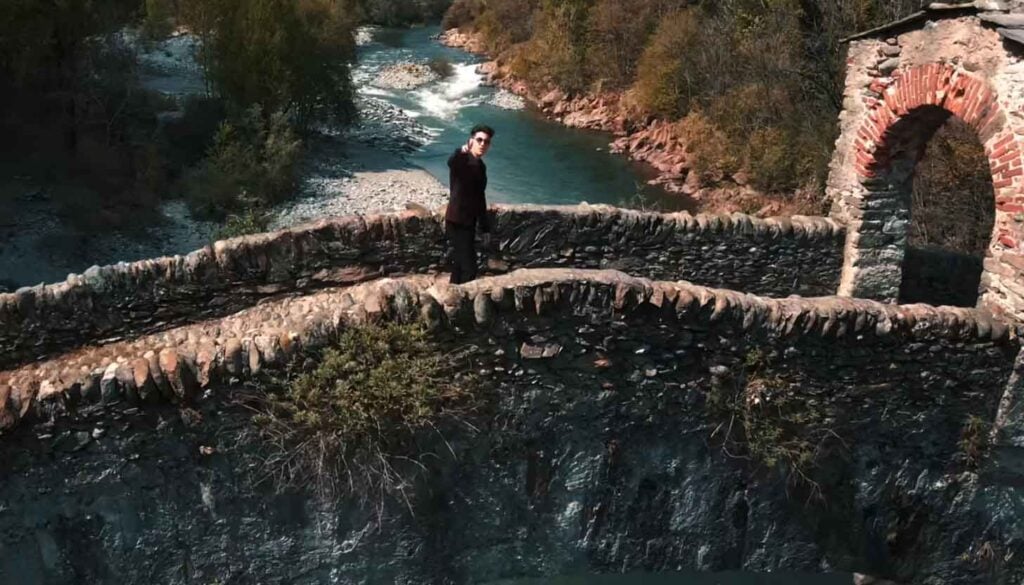
Il video: girato a Torino utilizzando il Ponte del Diavolo
The video: filmed in Torino using the Devil Bridge
Il video ufficiale amplifica questa idea con un gioco da tavolo chiamato “Cartagine,” dove ogni casella rappresenta un’epoca diversa: dall’Antico Egitto al Medioevo, fino ai dinosauri.
The official video reinforces this idea with a board game called “Cartagine,” where each square represents a different historical era, from Ancient Egypt to the Middle Ages and even the time of dinosaurs.
Girato a Torino, il video mostra Aloia su un suggestivo ponte medievale: il Ponte del Diavolo a Lanzo Torinese, costruito nel 1378 e avvolto da leggende secondo cui sarebbe stato costruito dal diavolo stesso.
Filmed in Turin, the video features Aloia standing on a striking medieval bridge: the Devil’s Bridge in Lanzo Torinese, built in 1378 and steeped in legend, said to have been constructed by the devil himself.
Tra arte, musica e ispirazione e “il filo rosso”
Between Art, Music, inspiration and “il Filo Rosso”
Un filo rosso attraversa la musica di Aloia: l’amore per l’arte, la letteratura, filosofia, fantasia e il dialogo tra passato e presente. Le sue canzoni hanno persino ispirato molti giovani ad avvicinarsi alla storia dell’arte… e questo, inutile dirlo, mi conquista completamente.
A red thread runs through Aloia’s music: a love for art, literature, philosophy, fantasy and the dialogue between past and present. His songs have even inspired a new generation to study art history… something that completely wins me over.
In italiano, l’espressione idiomatica “il filo rosso” indica un tema ricorrente o un’idea che collega e attraversa una storia, un’opera d’arte, una canzone o un insieme di lavori. Deriva dall’immagine di un filo colorato intrecciato nel tessuto, che rende visibile il disegno nascosto.
In Italian, the idiomatic expression “il filo rosso” means a recurring theme or connecting idea that runs through a story, artwork, song, or body of work. It comes from the image of a colored thread woven through fabric, making the hidden pattern visible.
Imparare l’italiano… con un salto nel tempo e un tocco di fantasia
Learn Italian… with time travel and a touch of whimsy
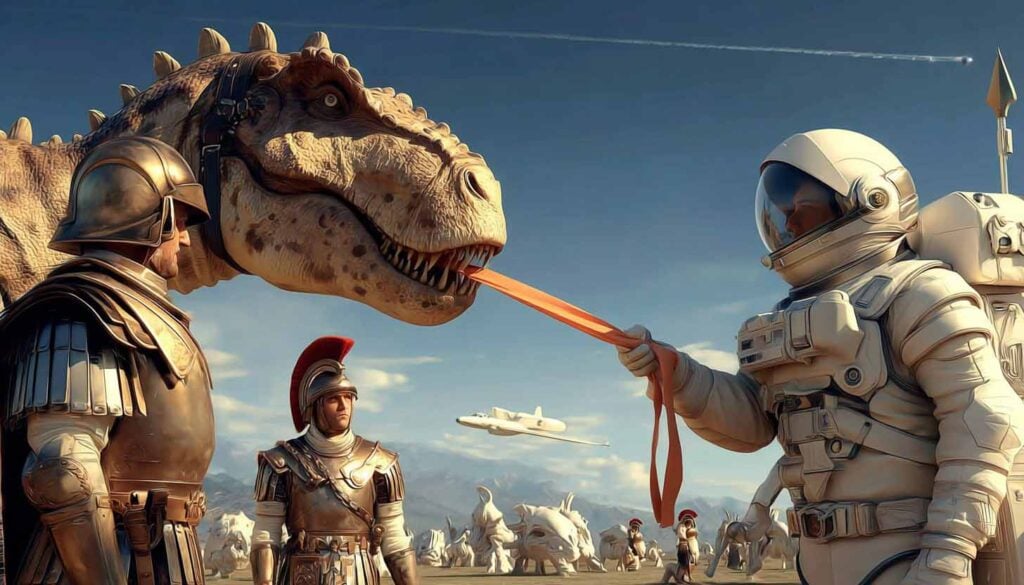
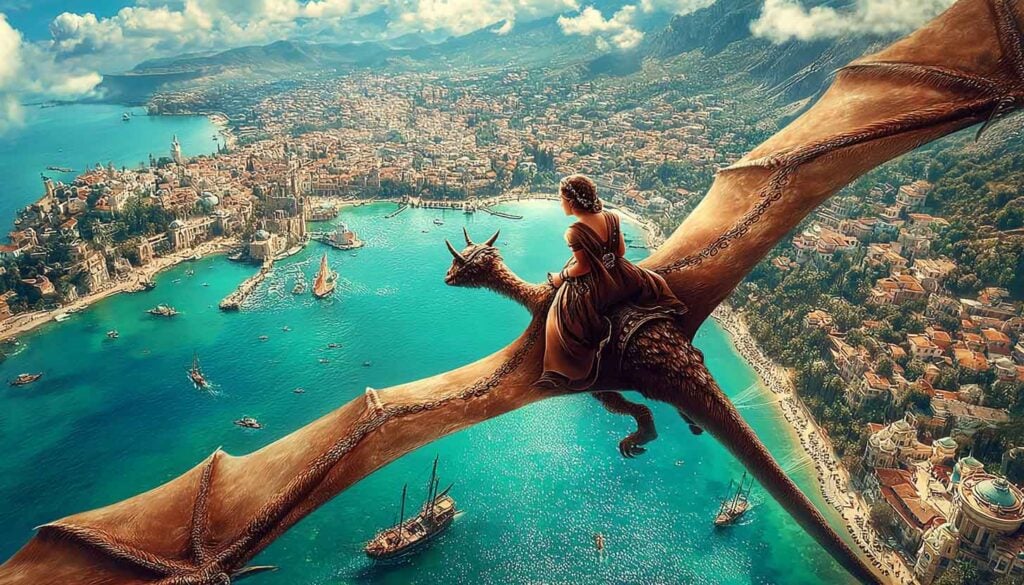
Praticare una lingua ogni giorno è fondamentale, ma diciamolo: a volte può diventare ripetitivo e banale. Allora perché non renderlo più creativo? Lasciati ispirare da Cartagine e inventa scenari surreali: e se i dinosauri governassero Roma? E se Cesare avesse un dinosauro come animale domestico? E se Didone sorvolasse il suo impero cartaginese sul dorso di uno pterodattilo gigante?
Practicing a language every day is essential, but let’s be honest: sometimes it can feel repetitive and mundane. So why not make it more creative? Let yourself be inspired by Cartagine and invent surreal scenarios: What if dinosaurs ruled Rome? What if Caesar had a dinosaur as a pet? What if Dido flew over her Cartheginian Empire on a giant pterodactyl?
Puoi portare le tue competenze linguistiche a un livello più creativo inventando frasi di fantasia in inglese da tradurre in italiano. Usale per esercitarti con nuovo vocabolario, tempi verbali, preposizioni e strutture grammaticali. Crea una piccola serie di esercizi attorno a un tema giocoso e, praticando in questo modo, potresti iniziare a vedere veri progressi. Parole che prima non riuscivi a ricordare verranno più spontanee, e anche le costruzioni grammaticali che sembravano rigide o difficili inizieranno a risultare più naturali, perché ora sono legate a immagini, storie e a un pizzico di piacevole assurdità.
You can take your language skills to new creative heights by inventing whimsical sentences in English to translate into Italian. Use them to practice new vocabulary, verb tenses, prepositions, and grammar structures. Create a small series of exercises around one playful theme, and after practicing this way, you may begin to see real progress. Words that once refused to stick may come more naturally, and grammar constructions that felt stiff or confusing may start to feel more familiar, because now they are connected to images, stories, and a little bit of delightful absurdity.
Proviamo insieme!
Let’s try together!
Beginner
Cesare parla con un brontosauro nel Foro Romano e chiede un consiglio.
Caesar speaks with a brontosaurus in the Roman Forum and asks for advice.
La regina Didone prende il tè con le sue dame di compagnia, uno stormo di pappagalli colorati che adorano spettegolare sulle storie d’amore del regno.
Queen Dido has tea with her ladies-in-waiting, a flock of colorful parrots who love to gossip about love affairs in the kingdom.
Intermediate
Se Cesare avesse ascoltato il suo brontosauro, avrebbe evitato molti problemi politici.
If Caesar had listened to his brontosaurus, he would have avoided many political problems.
Se Didone avesse avuto pappagalli così curiosi, le avrebbero raccontato tutti i segreti del palazzo.
If Dido had had such curious parrots, they would have told her all the secrets of the palace.
Advanced
Se Cesare si fosse fidato del brontosauro che gli dava consigli nel Foro Romano, forse avrebbe governato con più saggezza e meno superbia.
If Caesar had trusted the brontosaurus giving him advice in the Roman Forum, perhaps he would have governed with more wisdom and less arrogance.
Se Didone avesse saputo che i suoi pappagalli avrebbero spifferato tutti i segreti del palazzo, li avrebbe invitati comunque al tè.
If Dido had known that her parrots would blurt out all the palace secrets, she would have invited them to tea anyway.
Provaci anche tu: scegli una canzone, un mito o un personaggio storico, inventa tre frasi e lascia che l’italiano ti porti altrove.
Give it a try: choose a song, a myth, or a historical figure, invent three sentences, and let Italian take you somewhere new.
🇮🇹 Un consiglio dalla Matta 🇮🇹
Matta Italian Language Tip!
Imagining “What If…” in Italian
How to express hypothetical or unreal ideas
When you want to express a hypothetical or unreal idea in Italian, you often use the periodo ipotetico, the Italian “if” structure. In English, we say things like: If dinosaurs lived in Rome, I would go to the Colosseum. Italian can do this in several ways, depending on your level.
For beginning students, don’t panic and don’t wrestle the subjunctive dragon yet. You can still express “what if” ideas using simpler structures using present and future tenses. Advanced students can gallop straight into the glorious grammatical empire of the congiuntivo, where hypothetical dinosaurs roam freely!
Beginner-Friendly Options
You can use se + present tense + future tense for a simple, possible idea.
Se i dinosauri vivono a Roma, andrò al Colosseo e sceglierò un dinosauro come animale domestico.
If dinosaurs live in Rome, I will go to the Colosseum and choose a dinosaur as a pet.
For More Advanced Students
Use se + congiuntivo imperfetto + condizionale presente for an imaginary situation in the present.
Se i dinosauri vivessero a Roma, andrei al Colosseo e sceglierei un dinosauro come animale domestico.
If dinosaurs lived in Rome, I would go to the Colosseum and choose a dinosaur as a pet.
Use se + congiuntivo trapassato + condizionale passato for an unreal situation in the past.
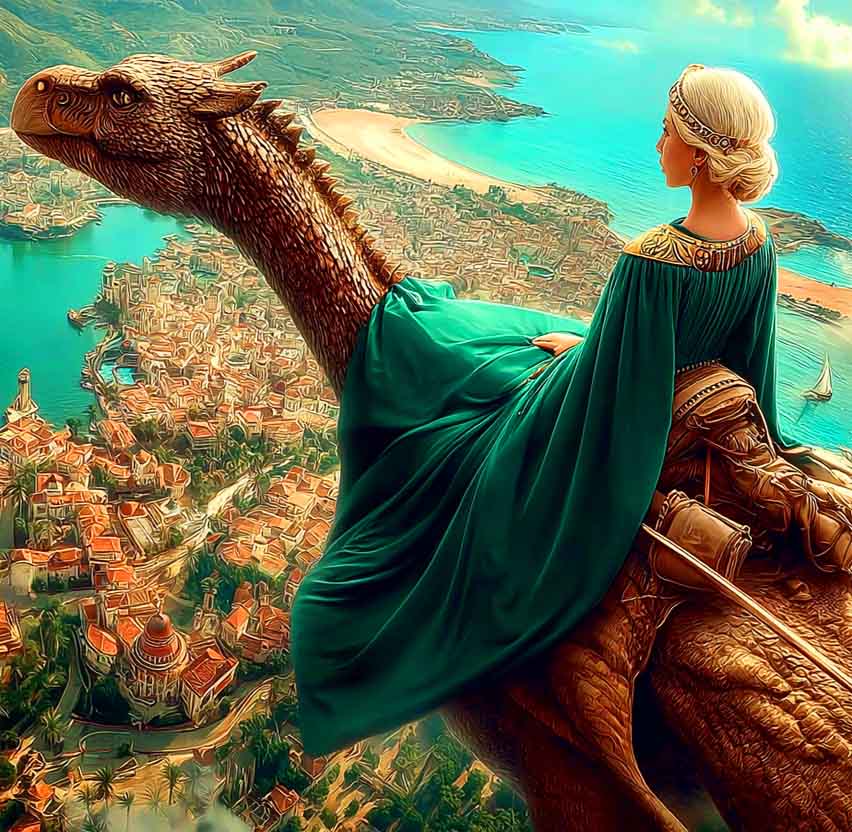
Se Didone avesse sorvolato Cartagine sul dorso di uno pterodattilo gigante, avrebbe visto tutto il suo regno dall’alto.
If Dido had flown over Carthage on the back of a giant pterodactyl, she would have seen her whole kingdom from above.
Another Matta Tip: If you’d like to print or create a PDF of this post you can easily do so using the Chrome Browser Extension —-> GoFullPage! It works beautifully!