Tra espresso, sfogliatelle e fantasmi letterari nel salotto storico di Napoli
Espresso, Sfogliatelle, and Literary Ghosts in Naples’ Historic Drawing Room
Espresso, sfogliatelle e un assaggio della Napoli di un’altra epoca
Espresso, Sfogliatelle, and a Taste of Naples from Another Era
Ci sono posti in cui si entra semplicemente per prendere un caffè. E poi ci sono posti in cui, appena varcata la soglia, si ha la sensazione di essere entrati in un’altra epoca.
There are places you enter simply to have a coffee. And then there are places where, the moment you cross the threshold, you feel as though you’ve stepped into another era.
Il Gran Caffè Gambrinus di Napoli appartiene decisamente alla seconda categoria.
Naples’ Gran Caffè Gambrinus definitely belongs to the second category.
La mattina dopo il mio arrivo a Napoli lo scorso luglio, il Gambrinus è stata la mia prima tappa. Dopotutto, quale modo migliore per iniziare una giornata napoletana se non con un vero espresso e una sfogliatella in uno dei caffè più famosi d’Italia?
The morning after I arrived in Naples last July, Gambrinus was my very first stop. After all, what better way to begin a Neapolitan day than with a proper espresso and a sfogliatella in one of Italy’s most famous cafés?
E non sono rimasta delusa.
And I was not disappointed.
Nel cuore di Napoli
In the Heart of Naples
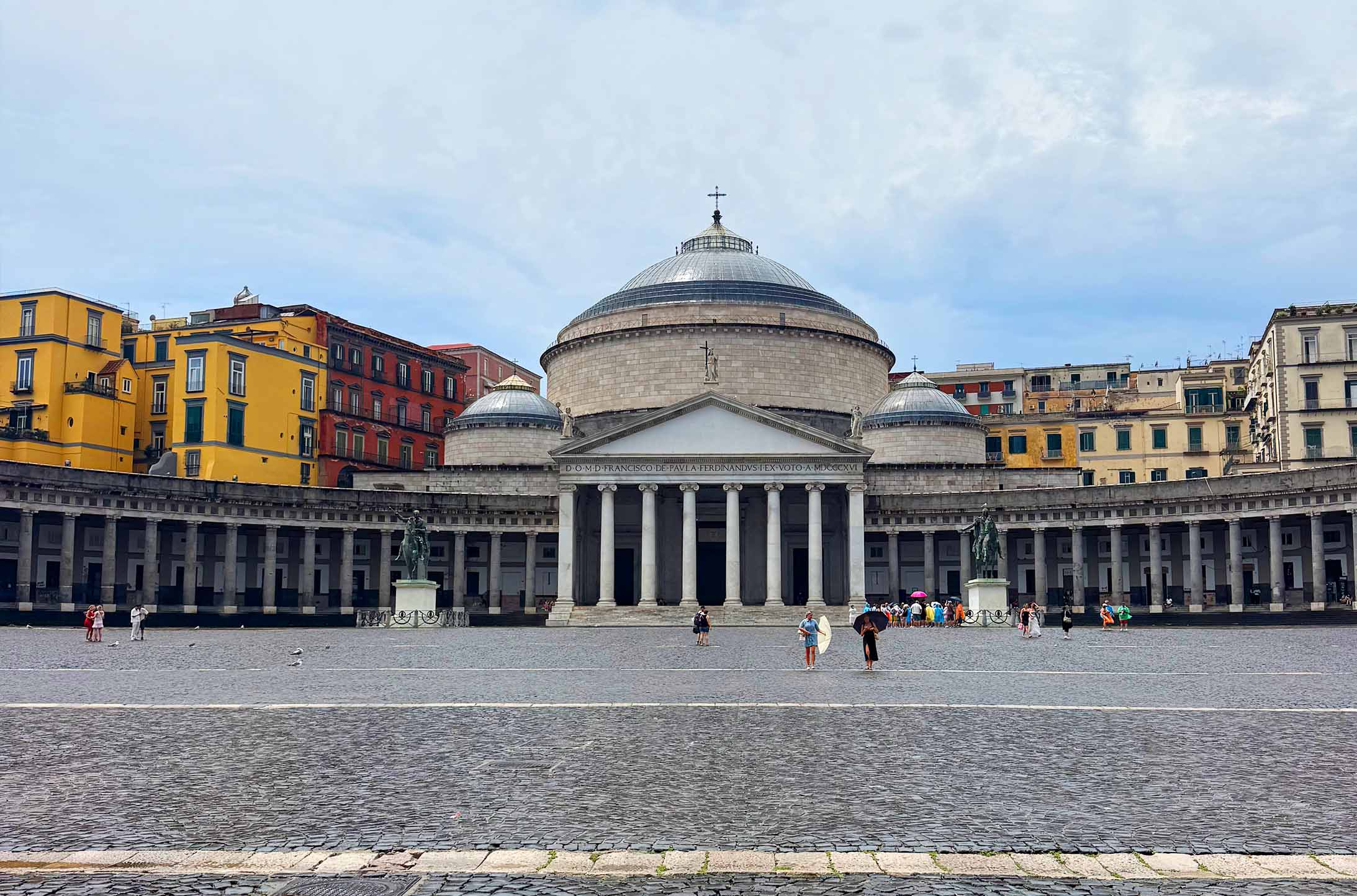
Il Gambrinus occupa uno degli angoli più spettacolari di Napoli, in Piazza Trieste e Trento, affacciato su Piazza del Plebiscito e a pochi passi dal Palazzo Reale, dalla Basilica di San Francesco di Paola e dal Teatro di San Carlo.
Gambrinus occupies one of the most spectacular corners of Naples, on Piazza Trieste e Trento, overlooking Piazza del Plebiscito and just steps from the Royal Palace, the Basilica of San Francesco di Paola, and the Teatro di San Carlo.
È difficile immaginare una posizione più napoletana. Uscite dal Gambrinus e Napoli vi aspetta fuori dalla porta: palazzi monumentali, motorini, voci, teatro e quel movimento continuo che rende la città irresistibile.
It is difficult to imagine a more Neapolitan location. Step outside Gambrinus and Naples is waiting: monumental architecture, scooters, voices, theater, and that constant movement that makes the city irresistible.
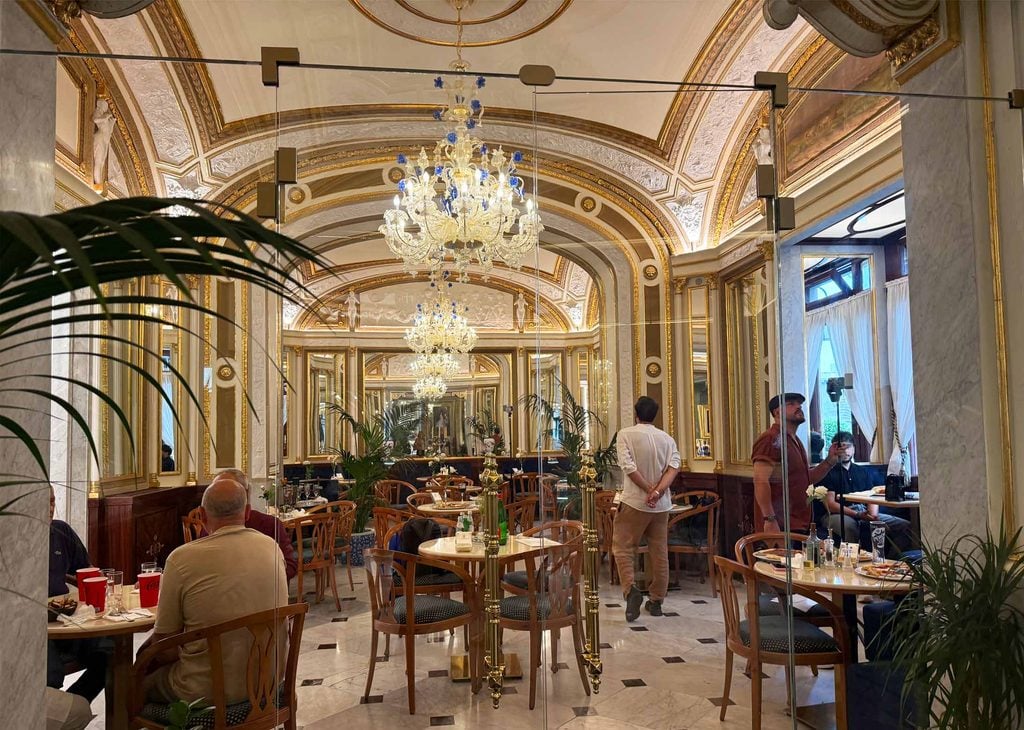
Fondato nel 1860, il caffè fu trasformato nel 1890 dall’architetto Antonio Curri, con il contributo di numerosi artisti e artigiani. Marmi, stucchi, dipinti e arredi crearono l’elegante salotto in stile Liberty che ammiriamo ancora oggi.
Founded in 1860, the café was transformed in 1890 by architect Antonio Curri, with the help of numerous artists and artisans. Marble, stucco, paintings, and elegant furnishings created the magnificent Liberty-style salon we still admire today.
Curiosamente, il nome Gambrinus deriva dal leggendario re delle Fiandre, considerato l’inventore della birra. Un nome legato alla birra per quello che sarebbe diventato un tempio del caffè napoletano!
Curiously, the name Gambrinus comes from the legendary King of Flanders, traditionally credited with inventing beer. A beer-inspired name for what would become a temple of Neapolitan coffee!
Il salotto letterario di Napoli
Naples’ Literary Drawing Room
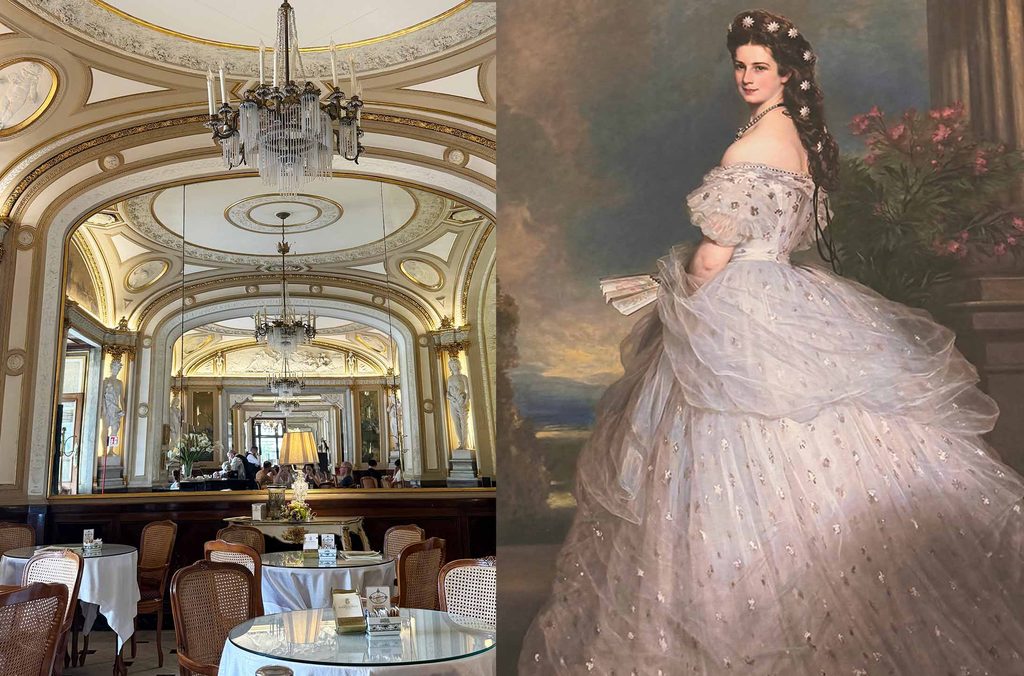
Il Gambrinus non è mai stato soltanto un bar. Tra la fine dell’Ottocento e l’inizio del Novecento diventò uno dei grandi salotti culturali di Napoli, frequentato da scrittori, artisti, intellettuali e personaggi illustri.
Gambrinus has never been simply a coffee bar. By the late nineteenth and early twentieth centuries, it had become one of Naples’ great cultural salons, frequented by writers, artists, intellectuals, and celebrated personalities.
Ai suoi tavolini si sono seduti Gabriele D’Annunzio, Matilde Serao, Oscar Wilde ed Ernest Hemingway, insieme a nobili e membri delle famiglie reali. D’Annunzio scrisse qui i versi della celebre canzone napoletana “’A vucchella,” e persino l’imperatrice Elisabetta d’Austria, la famosa Sissi, passò dal Gambrinus.
Gabriele D’Annunzio, Matilde Serao, Oscar Wilde, and Ernest Hemingway all passed through its rooms, along with aristocrats and royalty. D’Annunzio even wrote the verses of the famous Neapolitan song “’A vucchella” here, and Empress Elisabeth of Austria, the famous Sissi, also stopped at Gambrinus.
Insomma, ordinare un espresso qui significa bere il caffè in compagnia di parecchi fantasmi illustri.
So, ordering an espresso here means drinking your coffee in the company of quite a few illustrious ghosts.
Un caffè che il fascismo voleva mettere a tacere
A Café Fascism Tried to Silence
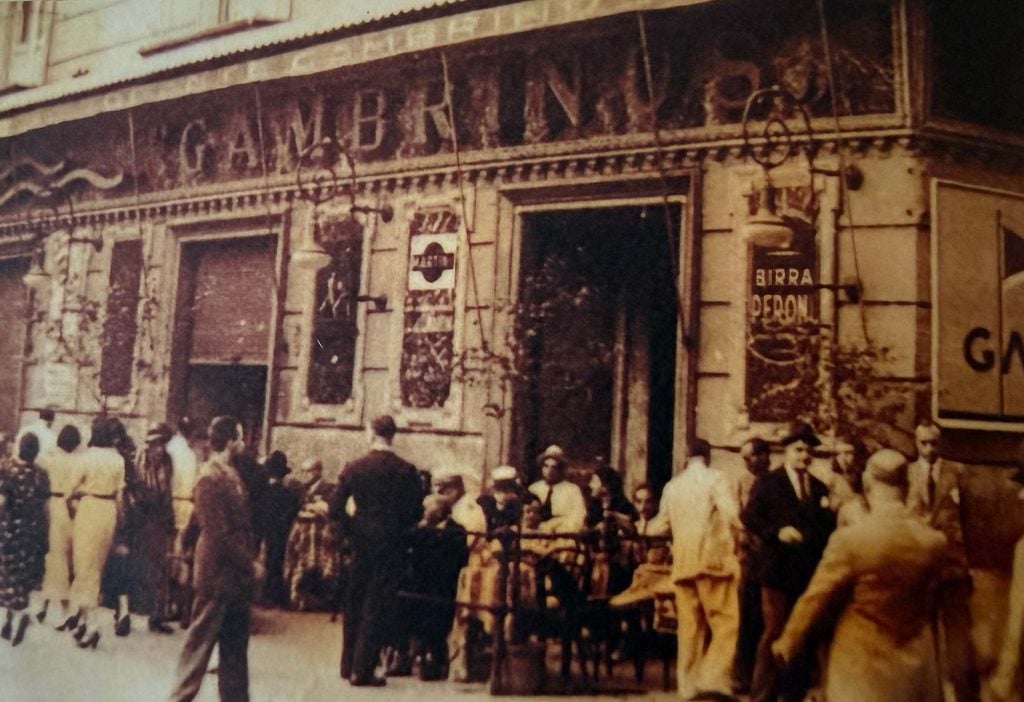
La storia del Gambrinus ha anche un capitolo più cupo. Nel 1938, durante il regime fascista, il locale fu costretto a chiudere, considerato un luogo di ritrovo di antifascisti e intellettuali poco graditi al regime. Parte delle sue storiche sale fu successivamente occupata dal Banco di Napoli.
Gambrinus also has a darker chapter in its history. In 1938, during the Fascist regime, the café was forced to close, having become a gathering place for antifascists and intellectuals unwelcome to the regime. Part of its historic premises was later occupied by the Banco di Napoli.
All’inizio degli anni Settanta, Michele Sergio e la sua famiglia rilevarono il locale e iniziarono a riportarlo agli antichi splendori, restituendo al Gambrinus il suo posto nella vita culturale e sociale di Napoli.
In the early 1970s, Michele Sergio and his family took over the café and began restoring it to its former glory, returning Gambrinus to its place at the heart of Naples’ cultural and social life.
Prima il caffè. Poi la sfogliatella.
First the Coffee. Then the Sfogliatella.
Ma torniamo alla mia prima mattina a Napoli. Dopo aver ammirato gli specchi, gli stucchi dorati e tutta quell’eleganza d’altri tempi, era arrivato il momento di dedicarmi al vero motivo della mia visita: il caffè e la pasticceria!
But back to my first morning in Naples. After admiring the mirrors, gilded stucco, and all that old-world elegance, it was time to turn my attention to the real reason for my visit: the coffee and the pastries!
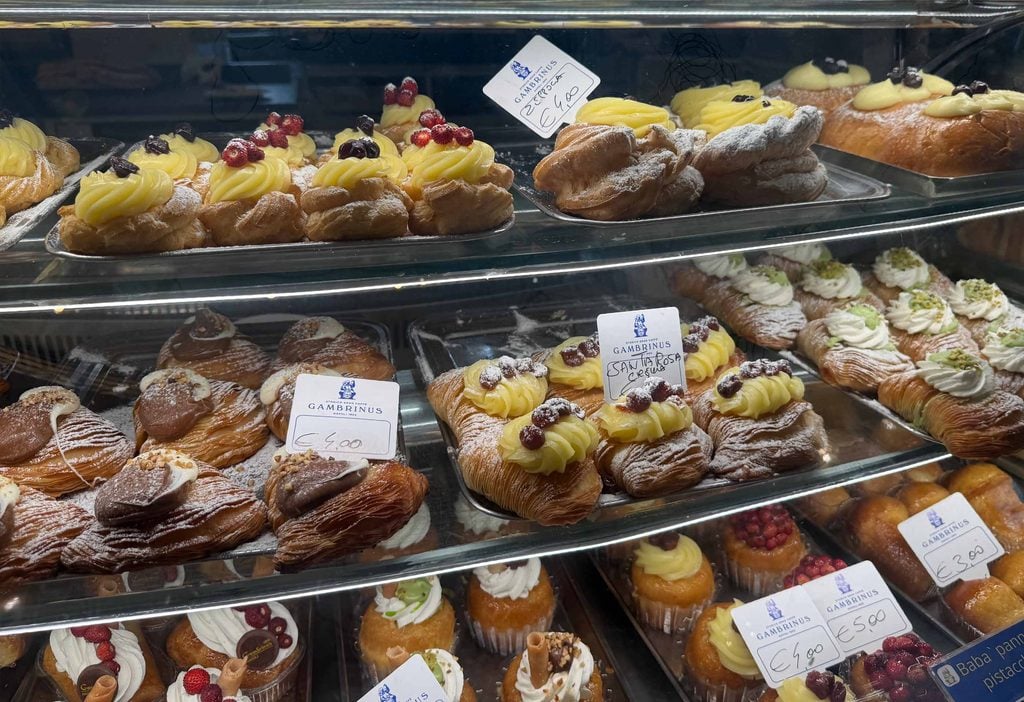
E che pasticceria! Il bancone era uno spettacolo: vassoi colmi di dolci napoletani, creme, cioccolato, babà e sfogliatelle. Avrei voluto assaggiare tutto, ma alla fine la sfogliatella ha vinto.
And what a pastry counter! It was a spectacle: trays overflowing with Neapolitan sweets, creams, chocolate, babà, and sfogliatelle. I wanted to try everything, but in the end, the sfogliatella won.
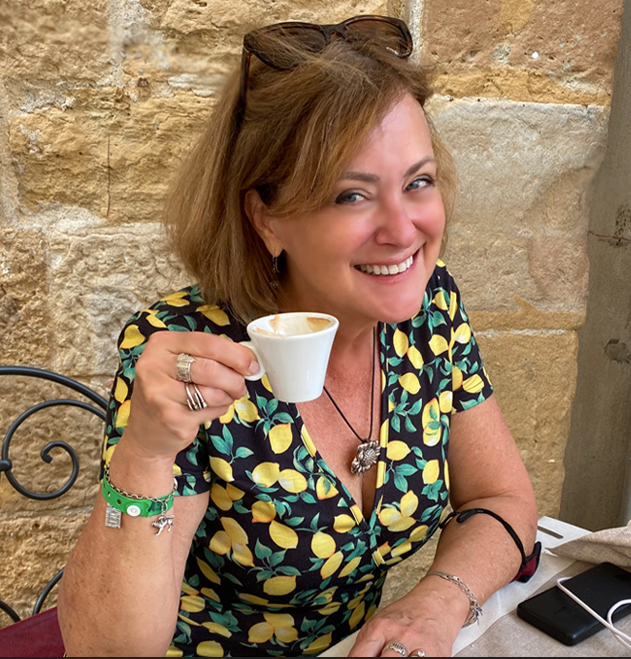
Poi, naturalmente, il caffè: corto, intenso e aromatico, proprio come deve essere un vero espresso napoletano. Seduta in quel magnifico salone con il mio caffè e la mia sfogliatella davanti a me, ho pensato: Ecco. Adesso sono davvero a Napoli.
Then, of course, came the coffee: short, intense, and aromatic, exactly as a proper Neapolitan espresso should be. Sitting in that magnificent salon with my coffee and sfogliatella in front of me, I thought: This is it. Now I’m really in Naples.
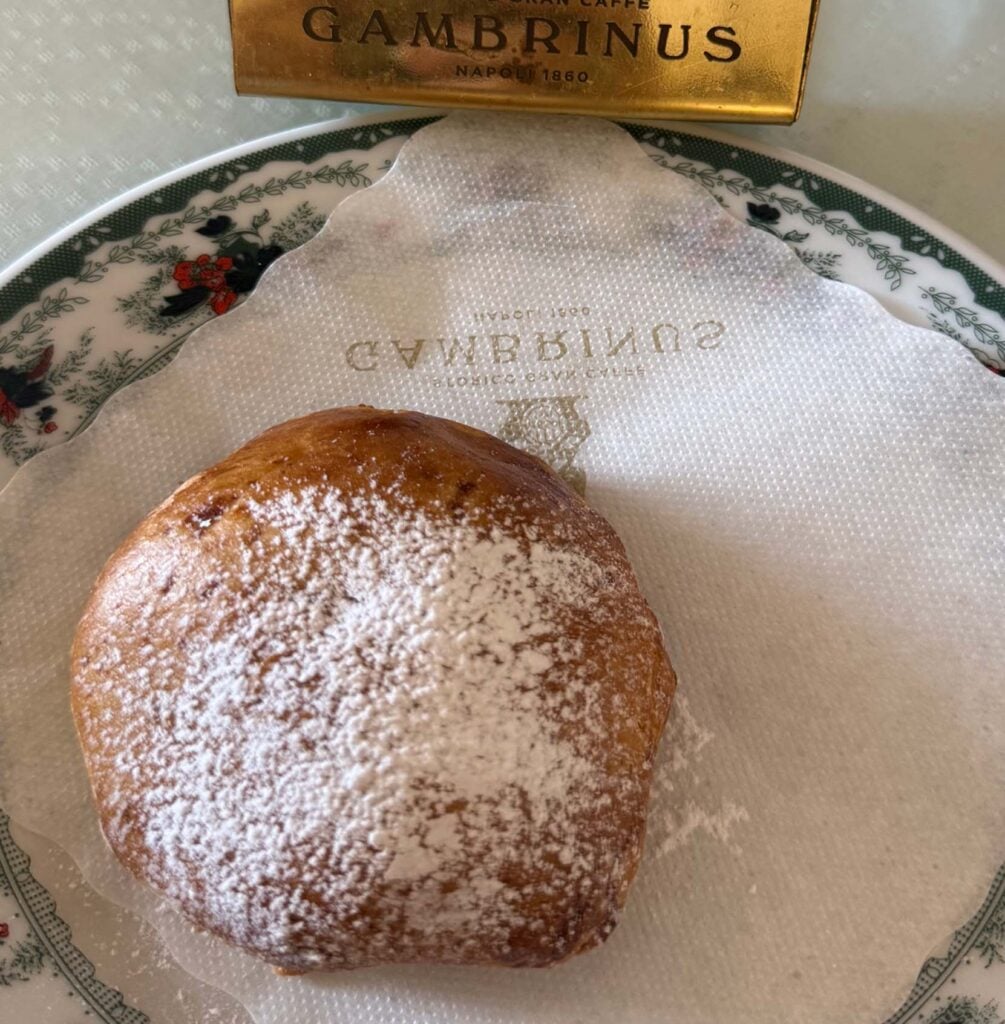
Curiosità: Ma che cos’è una sfogliatella?
Fun Fact: What Exactly Is a Sfogliatella?
Se non avete mai mangiato una sfogliatella, bisogna rimediare! Il nome viene da sfoglia, e ne esistono due versioni tradizionali: la riccia, croccante e formata da sottilissimi strati di pasta, e la frolla, più morbida e racchiusa nella pasta frolla. Entrambe nascondono un delizioso ripieno di ricotta, semolino, zucchero e canditi.
If you’ve never eaten a sfogliatella, this is a situation that needs correcting! Its name comes from sfoglia, or layers of pastry, and there are two traditional versions: riccia, crisp with delicate layers, and frolla, softer and wrapped in shortcrust pastry. Both are filled with a delicious mixture of ricotta, semolina, sugar, and candied fruit.
La riccia, con i suoi strati dorati, è quasi troppo bella da mangiare. Ho detto quasi.
With its crisp golden layers, the riccia is almost too beautiful to eat. I said almost.
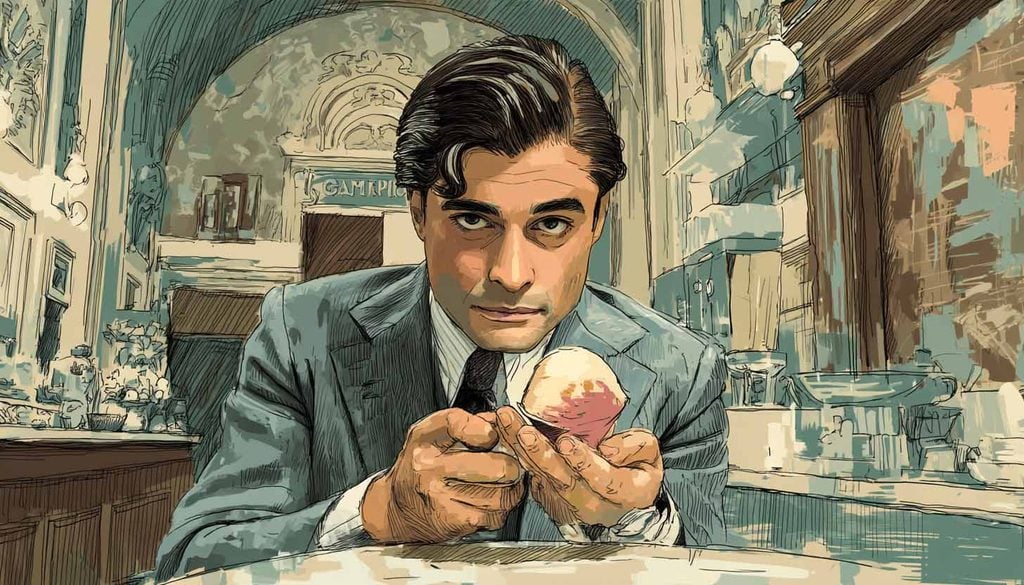
E poi… è entrato in scena il Commissario Ricciardi
And Then… Commissario Ricciardi Entered the Picture
Per me c’era un altro motivo per cui il Gambrinus era una tappa obbligata: il Commissario Ricciardi. Mentre sorseggiavo il mio caffè, non potevo fare a meno di cercarlo negli eleganti specchi che adornano le sale del Gambrinus.
For me, there was another reason Gambrinus was an essential stop: Commissario Ricciardi. As I sipped my coffee, I couldn’t help looking for him in the elegant mirrors lining the walls of the café.
E in fondo, quale posto migliore per immaginare Ricciardi? Fu proprio qui, nel 2005, che il suo autore, Maurizio de Giovanni, partecipò a un concorso per giallisti emergenti, dopo che alcuni amici lo avevano iscritto quasi a sua insaputa. All’epoca de Giovanni lavorava ancora in banca.
And really, what better place to imagine Ricciardi? It was right here, in 2005, that his creator, Maurizio de Giovanni, took part in a competition for emerging crime writers after some friends entered him almost without his knowledge. At the time, de Giovanni was still working at a bank.
Per il concorso creò Luigi Alfredo Ricciardi, commissario nella Napoli degli anni Trenta, tormentato da un dono, o forse una maledizione: vedere le vittime di morte violenta e percepirne l’ultimo pensiero.
For the competition, he created Luigi Alfredo Ricciardi, a police commissioner in 1930s Naples, tormented by a gift, or perhaps a curse: the ability to see victims of violent death and perceive their final thought.
E così, per un attimo, giuro, mi è sembrato quasi di vederlo riflesso nello specchio. Alto. Elegante. Serio. Naturalmente tormentato.
And so, for just a moment, I swear I almost saw him reflected in the mirror. Tall. Elegant. Serious. Naturally tormented.
Poi ho guardato di nuovo. Niente Ricciardi. Solo io, il mio espresso e una sfogliatella che stava rapidamente scomparendo.
Then I looked again. No Ricciardi. Just me, my espresso, and a sfogliatella that was rapidly disappearing.
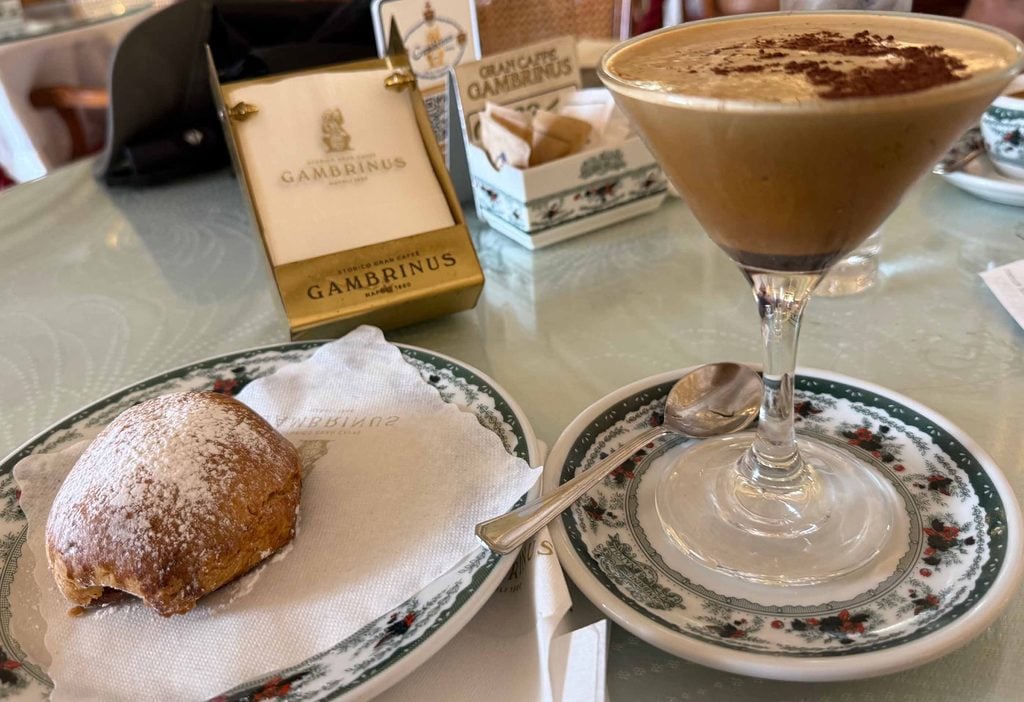
Un ultimo sorso di Napoli
One Last Sip of Naples
Quindi, la prossima volta che siete a Napoli, entrate. Ordinate un caffè. Aggiungete una sfogliatella, riccia o frolla, non giudico. Guardatevi intorno e immaginate tutte le persone che hanno attraversato quelle sale negli ultimi centocinquant’anni.
E se vedete un uomo dai capelli scuri e dagli occhi verdi che vi osserva attraverso lo specchio… beh, forse Ricciardi è tornato al Gambrinus anche lui.
So the next time you’re in Naples, go inside. Order a coffee. Add a sfogliatella, riccia or frolla, no judgment here. Look around and imagine all the people who have passed through those rooms over the last century and a half. And if you happen to notice a dark-haired, green-eyed man watching you through one of the mirrors… well, perhaps Ricciardi has returned to Gambrinus too.
🇮🇹 Un consiglio dalla Matta 🇮🇹
Matta Italian Language Tip!
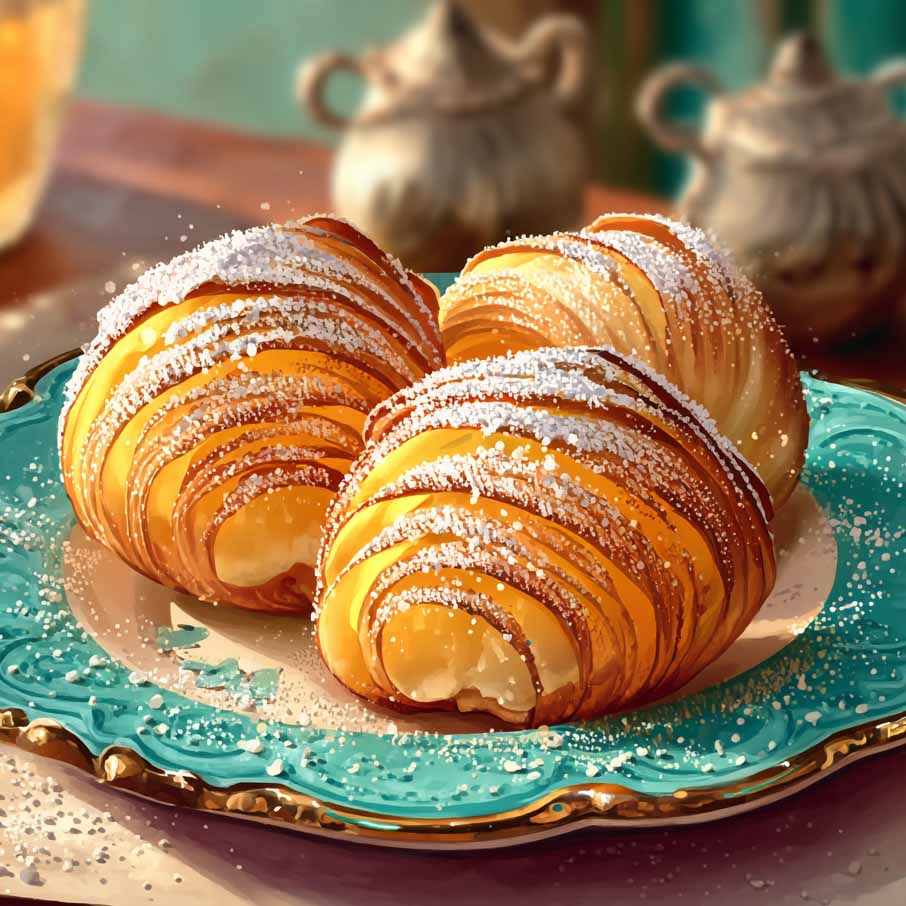
The word sfogliatella is derived from
a wonderful Italian verb: sfogliare.
Sfogliare significa girare le pagine di un libro, una rivista o un giornale, spesso senza leggerle tutte attentamente.
Sfogliare means to leaf or flip through the pages of a book, magazine, or newspaper, often without reading every page carefully.
Sfoglio il giornale mentre bevo il caffè.
I flip through the newspaper while I drink my coffee.
Ho sfogliato il libro prima di comprarlo.
I flipped through the book before buying it.
And, of course, sfoglia also refers to a thin sheet or layer of pastry, which brings us right back to our sfogliatella.
So at Gambrinus you can sfogliare a Maurizio de Giovanni novel while eating a sfogliatella.
Just try not to get crumbs between the pages!