
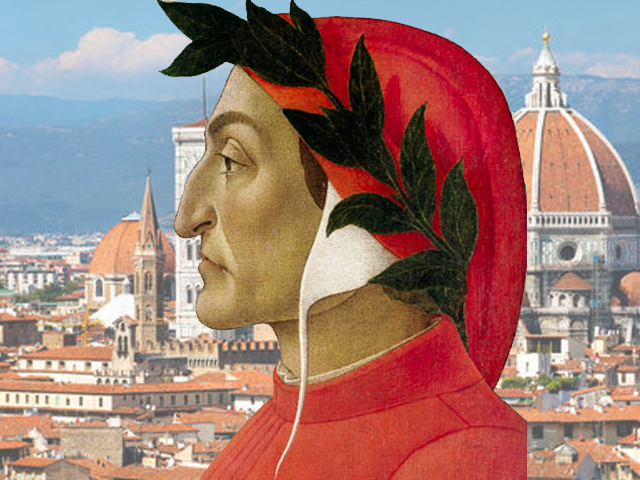
Buon Compleanno, Dante!
Happy Birthday, Dante!
Un compleanno epico per un poeta epico
An Epic Birthday for an Epic Poet
Quest’anno celebriamo il 750° anniversario della nascita di Dante Alighieri. Woo hoo! Auguri, Dante! Dopo settecentocinquant’anni sei ancora popolare come il giorno in cui hai pubblicato i tuoi canti e continui ad essere acclamato come “Il Padre della Lingua Italiana.” Bravo, grande uomo!
This year marks the 750th anniversary of the birth of Dante Alighieri. Woo hoo! Happy Birthday, Dante! After seven hundred and fifty years you’re still as popular as when you first published your cantos and continue to be heralded as “The Father of the Italian Language.” Way to go, big guy!
Perché dovremmo ringraziare Dante
Why We Should Thank Dante
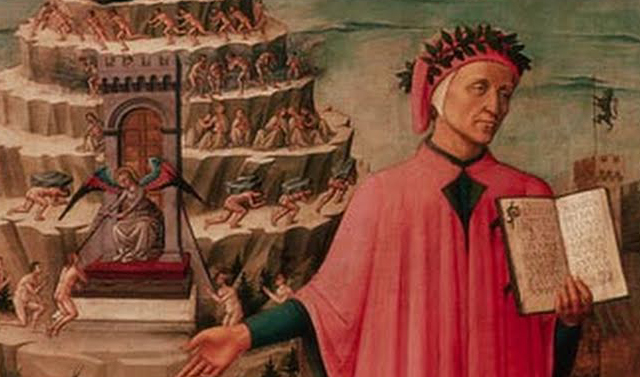
Se ami la lingua italiana quanto me, allora anche tu devi un debito di gratitudine a Dante! Poeta medievale, nel 1320 iniziò la Divina Commedia, ancora oggi considerata uno dei più grandi capolavori letterari della lingua italiana e della letteratura mondiale.
If you love the Italian language as much as I do, then you too owe a debt of gratitude to Dante! He was a medieval poet who in 1320 began The Divine Comedy, still considered one of the greatest literary works in the Italian language and a masterpiece of world literature.
Un viaggio attraverso l’aldilà
A Journey Through the Afterlife
Il poema epico di Dante contribuì a stabilire il dialetto toscano come standard per la lingua italiana. Diviso in tre parti—Inferno, Purgatorio e Paradiso—è scritto in prima persona e racconta il viaggio di Dante nei tre regni dei morti, dalla notte prima del Venerdì Santo al mercoledì dopo Pasqua, nella primavera del 1300. Virgilio, il poeta romano, lo guida attraverso l’Inferno e il Purgatorio; Beatrice, la donna ideale di Dante, lo accompagna in Paradiso.
Dante’s epic poem helped establish the Tuscan dialect as the standard for the Italian language. Divided into three parts—Inferno, Purgatory, and Paradise—it’s written in the first person and tells of Dante’s journey through the three realms of the dead, from the night before Good Friday to the Wednesday after Easter in the spring of 1300. The Roman poet Virgil guides him through Hell and Purgatory; Beatrice, Dante’s ideal woman, guides him through Heaven.
L’amore impossibile per Beatrice
The Impossible Love for Beatrice
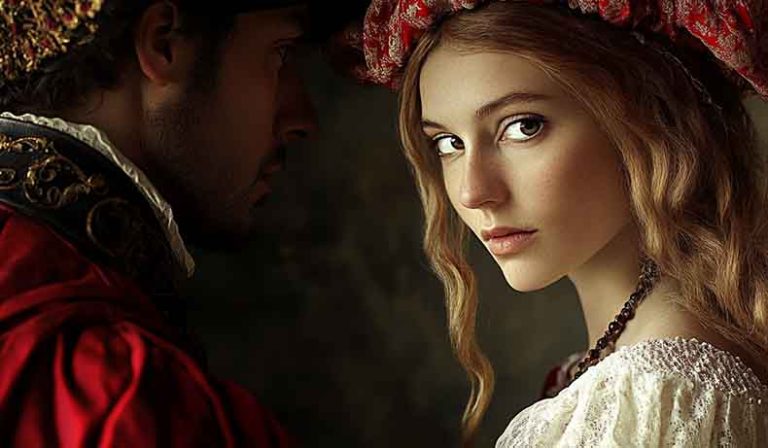
Beatrice era la donna fiorentina che ispirò gran parte dell’opera del poeta. La storia narra che Dante si innamorò di lei quando la vide per la prima volta, vestita con una tunica color cremisi, all’età di soli nove anni. Sebbene fosse giovanissimo, si innamorò perdutamente, credendola nobile, angelica e divina.
Beatrice was the Florentine woman who inspired much of the poet’s work. As the story goes, Dante fell in love with her when he first saw her wearing a crimson gown at the tender age of nine. Though so young, he fell head over heels, believing her noble, angelic, and divine.
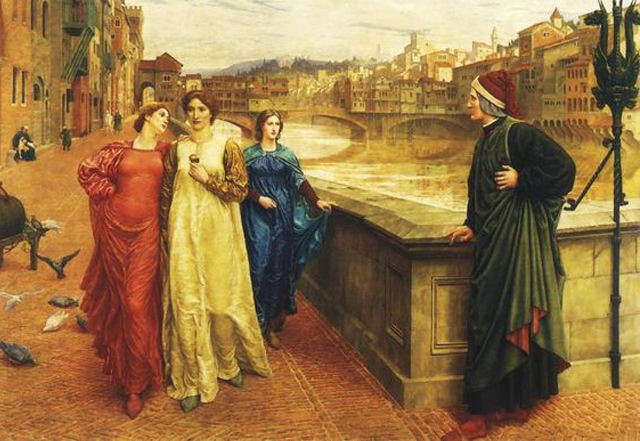
Ogni giorno Dante vagava per le strade di Firenze sperando di incontrarla, ma lei passava oltre senza parlargli o guardarlo. Poi, finalmente, un giorno sul Ponte Vecchio, Beatrice in un lungo abito bianco lo salutò timidamente. Colmo di gioia, Dante tornò a casa, sognando di lei—un sogno che avrebbe ispirato uno dei più grandi poemi di sempre.
Every day Dante wandered the streets of Florence hoping to see her, but she walked past without speaking or even glancing his way. Then, at last, one day on the Ponte Vecchio, Beatrice in a long white gown shyly greeted him. Overjoyed, Dante returned home, dreaming of her—a dream that would inspire one of the greatest poems ever written.
Due amori non corrisposti
Two Unrequited Loves
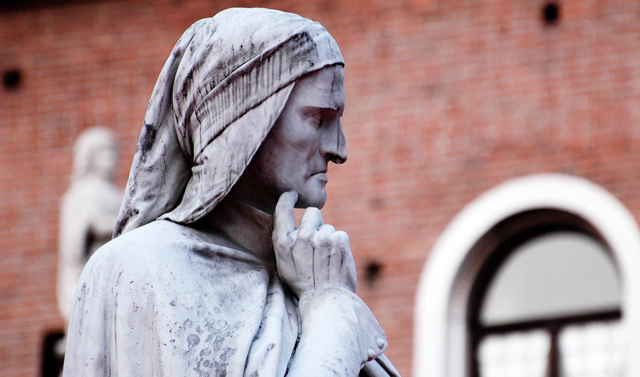
La storia di Dante e Beatrice è una delle più famose di amore non corrisposto. Ma, secondo me, Dante ne soffrì due volte. Più tardi nella vita, fu bandito da Firenze per motivi politici e non vi poté mai più fare ritorno. Vagò per l’Italia finché si stabilì a Verona, sempre un’anima in pena che bramava la sua amata città.
The story of Dante and Beatrice is one of the world’s most famous tales of unrequited love. But if you ask me, Dante suffered twice. Later in life, he was exiled from Florence for political reasons and was never allowed to return. He wandered through Italy until settling in Verona, always a lost soul yearning for his beloved city.
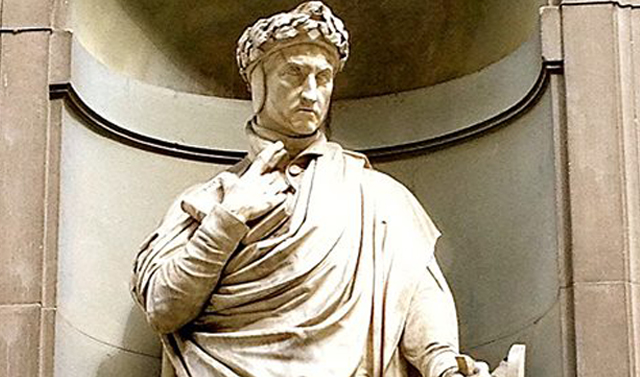
Oggi Firenze ha superato il rancore e ha eretto una splendida statua a Dante in Piazza Santa Croce. Ma se passi per Verona, vedrai anche lì una statua dedicata al poeta nella suggestiva Piazza dei Signori.
Today Florence has long since forgiven Dante, erecting a marvelous statue in Piazza Santa Croce. But if you wander through Verona, you’ll also find a statue dedicated to the poet in the beautiful Piazza dei Signori.
Grazie, Dante!
Thank You, Dante!
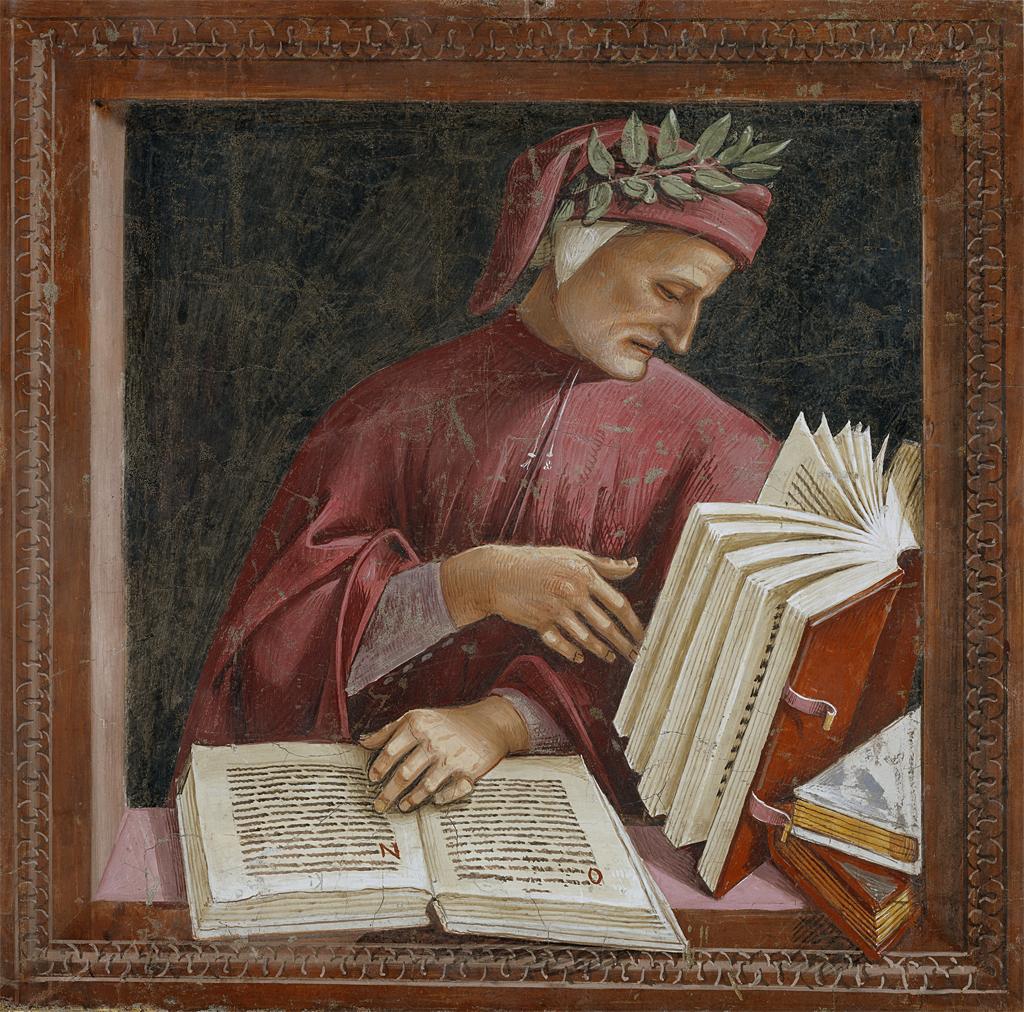
Grazie ancora, Dante, per aver contribuito a creare la bellissima lingua italiana! Continuerò il mio viaggio per impararla bene e prometto di usarla saggiamente… per renderti orgoglioso!
Thanks again, Dante, for your part in creating the beautiful Italian language! I will continue my journey to learn it well, and promise to use it wisely… and make you proud!
Dantismi famosi — Famous Dante Sayings
Use this form when referring to singular units of time (e.g., an hour, a day, a week)
Non aver paura; il nostro destino non può esserci tolto; è un dono.
Il segreto per fare le cose è agire.
La bellezza risveglia l’anima ad agire.
Da una piccola scintilla può nascere una fiamma.
Ricorda stanotte… perché è l’inizio di sempre.
I posti più caldi dell’Inferno sono riservati a coloro che,
nei momenti di grande crisi morale, mantengono la neutralità.
Nel mezzo del cammin di nostra vita, mi ritrovai
per una selva oscura ché la diritta via era smarrita.
Segui la tua stella!
L’arte, per quanto può, segue la natura come un allievo imita il maestro;
così la tua arte deve essere, per così dire, nipote di Dio.
E ultimo ma non meno importante…
Sai chi altro mette i suoi amici in cerchi?
Dante!
(L’ho detto davvero? LOL)
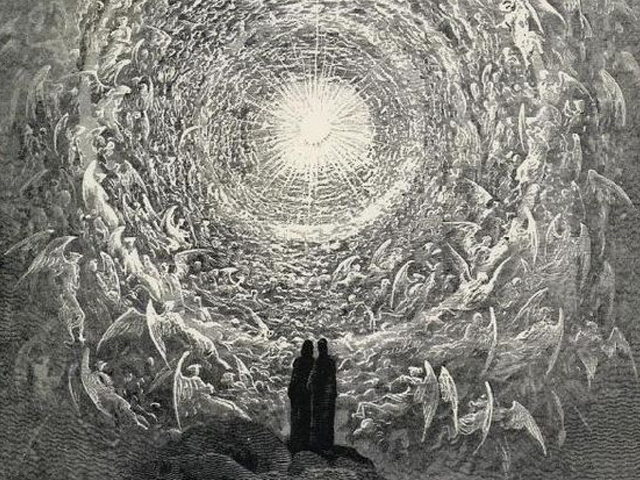



Ah, I wrote about Dante Day a couple of years ago on my blog!!! “Rudolph Valentino’s Favorite Poet Has His Day…Dante Day, March 25, 2021…and a New Connection Is Revealed” I recount how Valentino named Dante as his favorite poet and then continue on: “I studied the Divine Comedy in college and, apparently, so did my parents. I pulled off my bookshelf a copy of the “first annotated edition of the Italian text” which was published in 1909, with subsequent printings in 1911 and 1913. This edition, edited and annotated by C.H. Grandgent, Professor of Romance Languages, Harvard University includes fascinating diagrams to help the reader on the journey. I wish I had this edition in hand when I studied this work!” I posted some of the these diagrams from this book…they are great!
The “connection” is a coincidence related to this day…but more recently, I did actually discover my link to Valentino!